








The building blocks of electricity
The basics: how electricity works
The building blocks of electricity
The basics: how electricity works
Our expectations when it comes to electricity are usually as follows: press the button, turn on the switch, and the device does what you expect it to do. That’s often the extent of our thoughts on electricity, when in reality, it’s much more complex. We are more focused on the task at hand than the power we rely on throughout the day.
And yet, learning about the “not-so” fundamental, but necessary, journey electricity takes to power our daily lives, can give us all a better understanding of our relationship with power.
So, let’s start at the beginning of how it works:
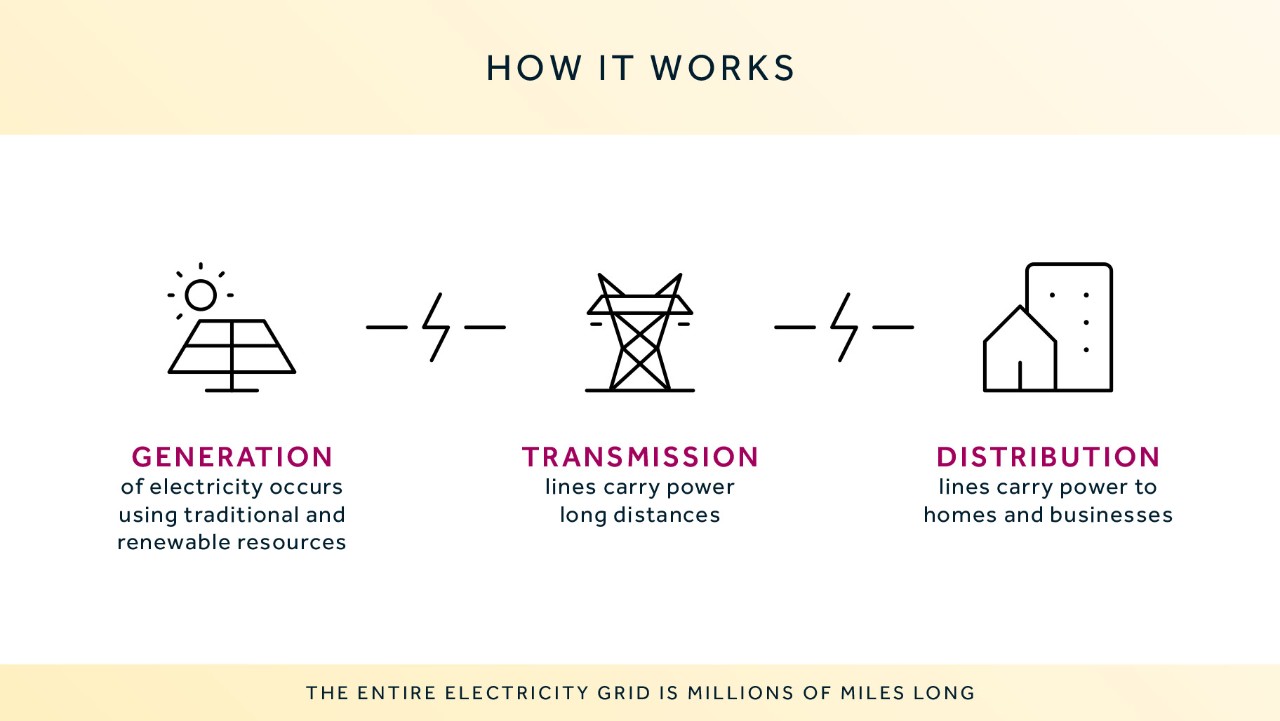
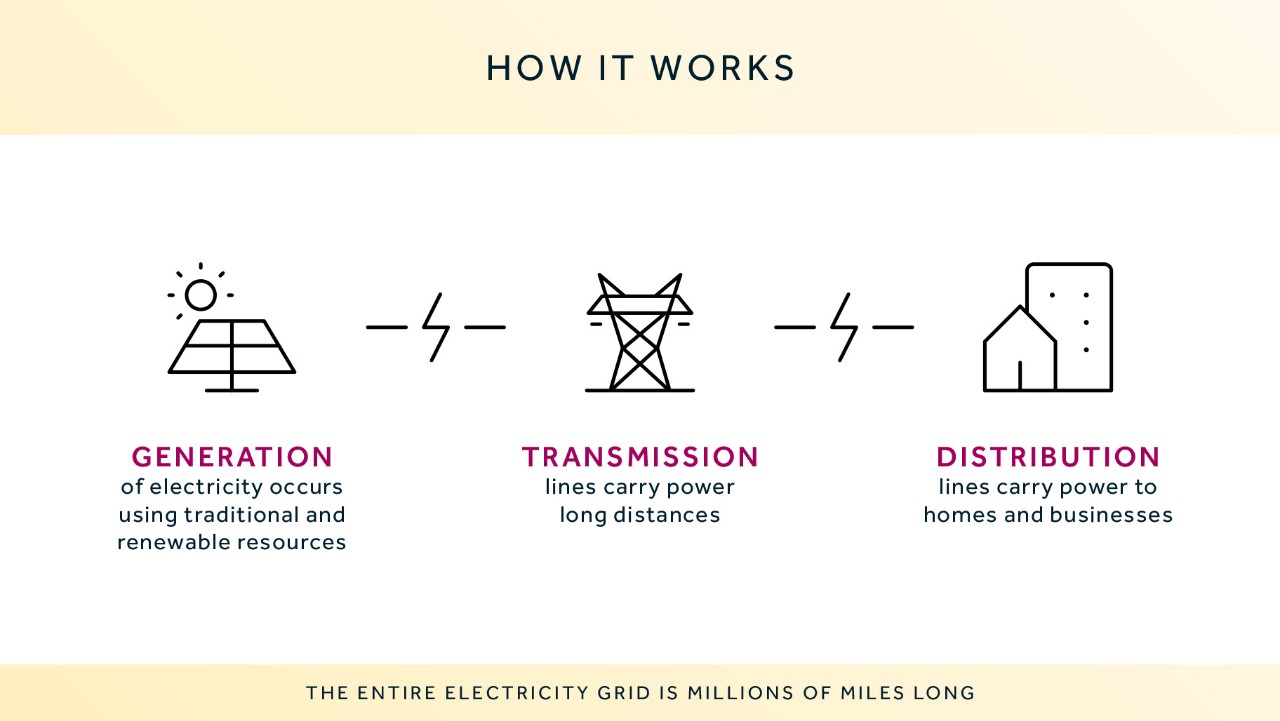
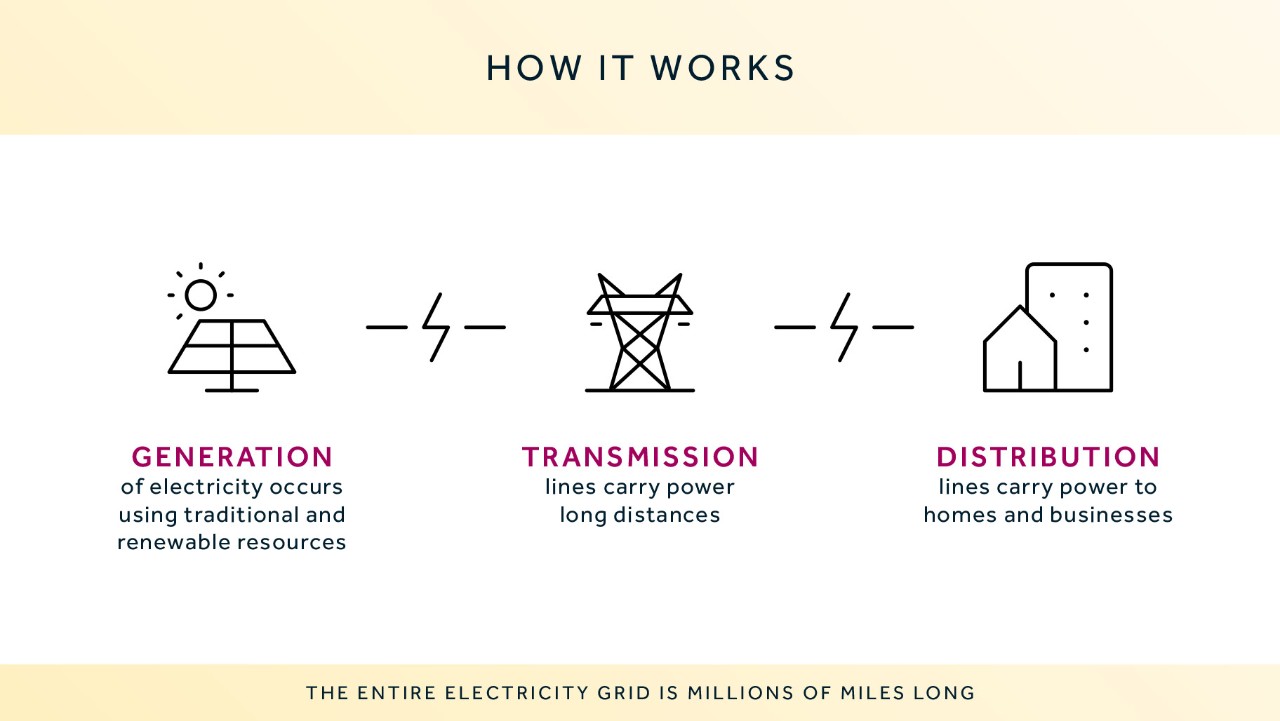
The basics of electricity can be summed up in a three-step process:
- Generation
- Transmission
- Distribution
Electricity Generation
A key characteristic of electricity is that it is not freely available in large amounts. Instead, it must be "produced" by transforming other forms of energy—i.e., chemical energy stored in natural gas, coal, nuclear energy, kinetic energy, wind, potential energy stored behind dams, and solar energy—into electricity. This transformation from a fuel source to electricity is characterized as generation.
Electricity Transmission
Transmission is the highway of the power grid. Like our system of roads, transmission lines are a network of poles and wires that allow high-voltage electricity to travel from its point of generation across long distances to us, the users. Transmission is the system that brings bulk electricity from across the country to substations that are closer to areas of demand.
Distribution of electrical power
After traveling across transmission lines, electricity undergoes a step-down process where its voltage is reduced to a level that can be used in our homes and businesses. While transmission is the highway of the electric grid, distribution is more like the local roads which bring power directly to our homes and our jobs. It turns our lights on, fuels our movie marathons, powers our electrical devices, and keeps our food fresh.
Made up of turbines, electrical wires, substations, and transformers, this three-step process forms the electrical grid that crosses states, cities, towns, and powers everything. And, as technology continues to evolve, the how of electricity is taking on more nuance than ever.
Interested in learning more about how your electricity works? Click the related content below to continue to delve into the details of how electricity affects our everyday lives.
Continue to the next article in this series: Understanding power generation

Share on