








The evolving grid: modernizing energy
The evolving grid: modernizing energy
The electric grid has gone through very few upgrades and optimizations since it was established. Though the model has been refined and perfected over time by grid operators, the opportunity for a more monumental shift is only in its early stages as new technologies, approaches, and concerns have changed how we view the grid.
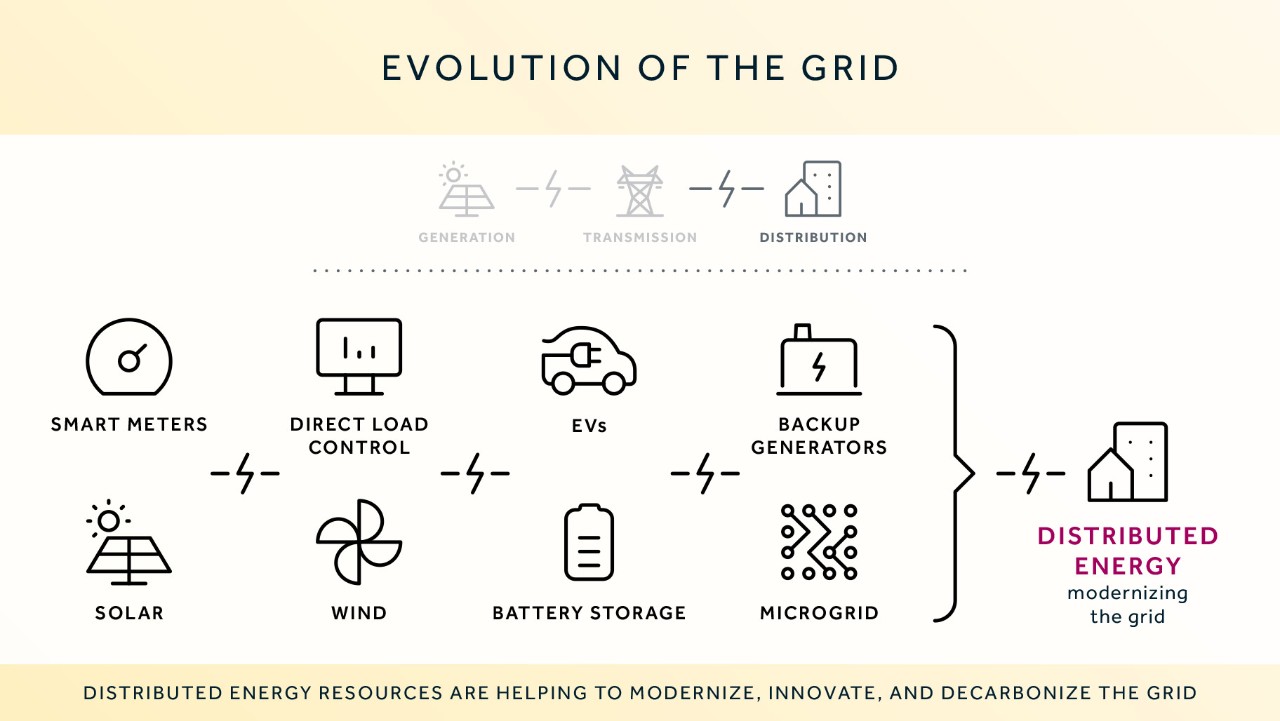
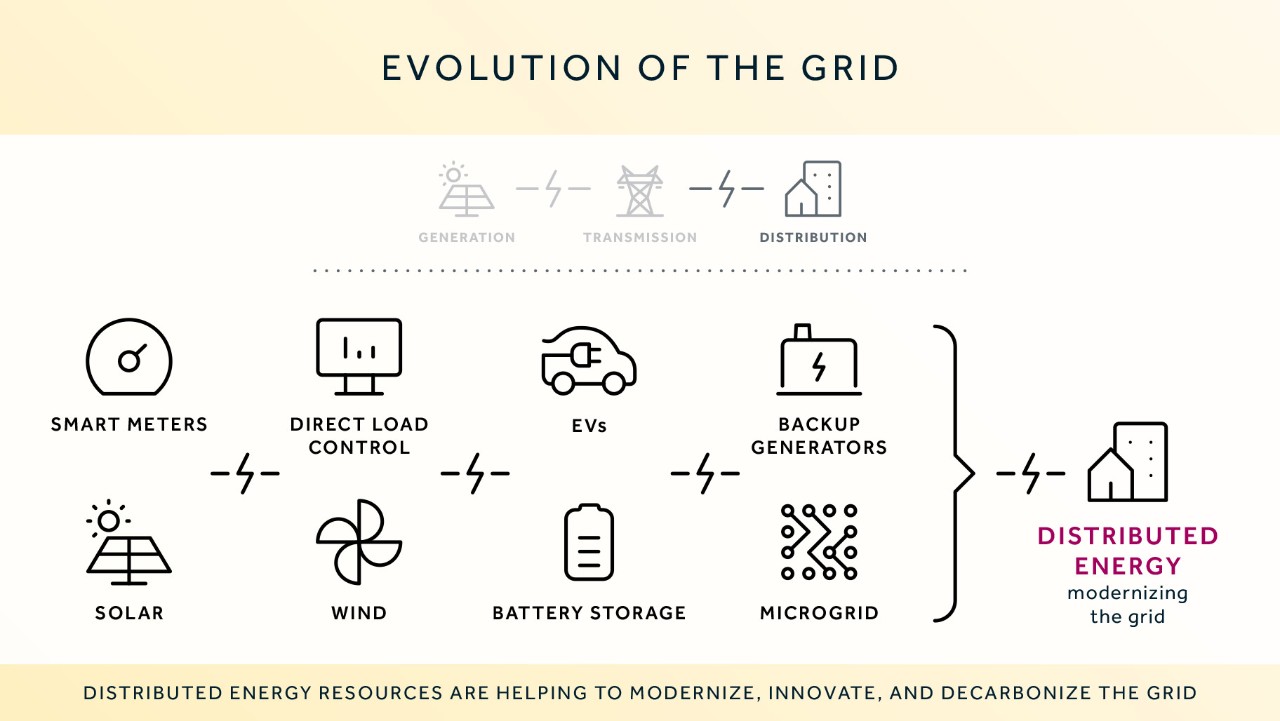
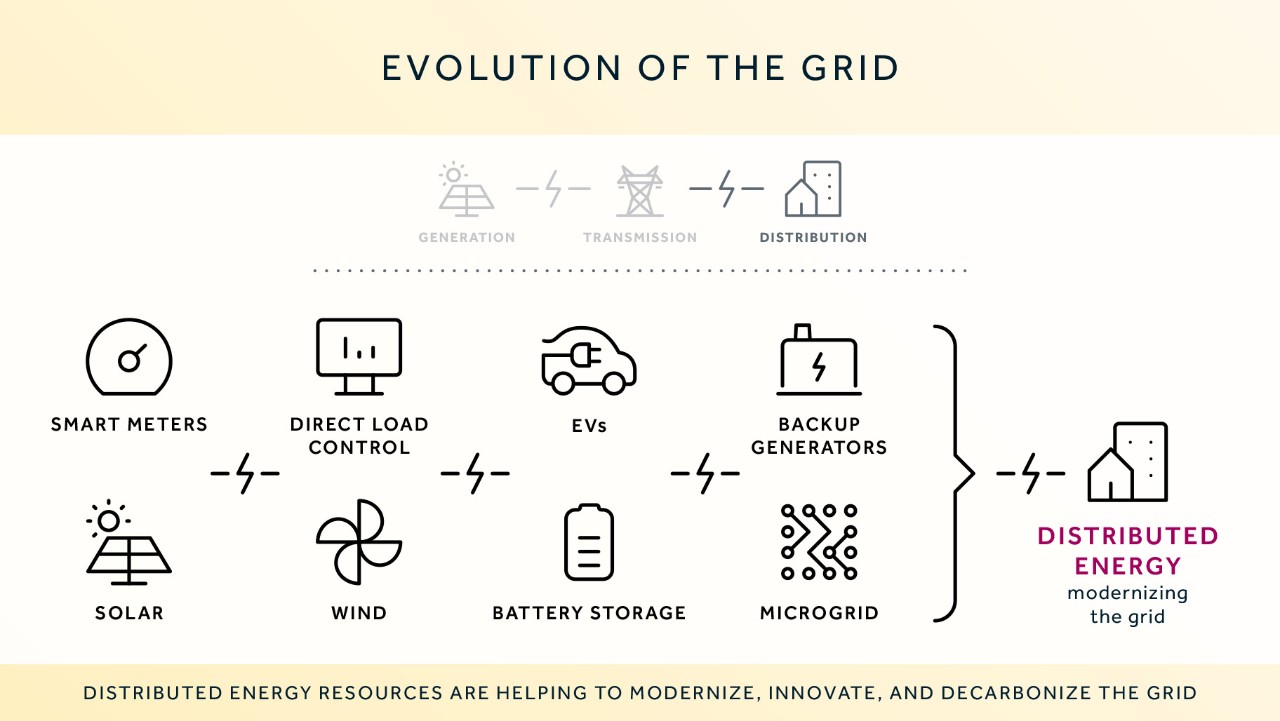
One way the electric system is expanding is with the inclusion and development of distributed energy resources (DERs). Whether it’s demand response, battery storage, microgrids, or advanced metering systems, DERs are helping to modernize and decarbonize the grid. While their addition adds complexity to the grid, it also changes how power traditionally works and our relationship with it.
Distributed energy resources
Distributed energy resources, often referred to as DERs, are small-scale energy generation or storage technologies connected to the grid at the distribution level. Common examples of DERs are solar panels, small wind turbines, and backup generators as well as technologies such as fuel cells, electric vehicles (EVs), and demand response programs. What makes these resources unique is that they are located close to the load they serve — whether a house, a business, or a larger facility, such as a college campus.
As distributed resources become more common, they help the electric grid evolve beyond a one-way system and are creating an opportunity for a more flexible and decentralized approach to power. This change would allow customers to contribute to grid reliability and have more direct control of their power and usage.
Employed and scaled to fit the needs of the user, DERs meet a variety of needs, including managing or offsetting traditional energy use, increasing energy reliability, helping to lower emissions, and improving fuel utilization. By implementing a multi-faceted approach to DERs, users can get electricity that is customized to meet their needs.
Smart meters
Net metering is one example of a DER that gives us more control over our power. Smart meters are electronic devices that not only measure electricity usage but also track real-time consumption. In doing so, these meters provide valuable and actionable information to the user and the power company.
For a power company, smart meter data can help them measure usage and allow them to more accurately bill for energy use. It allows electricity providers to track outages instantly and re-route electricity to avoid roadblocks and limit any negative impact on the consumer.
The data collected allows us, as customers, to make simple changes that make a big difference in reducing our usage and lowering costs. Given the benefits to both sides, smart meters are becoming more prevalent. These devices are currently installed in millions of homes and commercial buildings throughout the U.S. and Canada.
Microgrids
An example of a different approach to distributed energy is microgrids. Microgrids are the answer for energy consumers looking to meet their own energy needs, gain control over costs, and reduce their overall dependence on the traditional grid. The natural successor to emergency backup systems, microgrids are local energy grids that can work both as an extension of the grid as well as autonomously from it.
Their ability to work independently brings numerous benefits, both to users and to the grid itself. Having a system that can operate independently, gives consumers the ability to generate their own electricity, maintain energy reliability, alleviate demand on the grid during peak periods, and provides opportunities to sell excess generation back to the grid.
All of this creates an opportunity for cooperation that — when more developed and systemized — could allow demand-side resources and traditional generation to work symbiotically to serve and alleviate peak demand.
Though this interconnection has not been concretely established because of logistics and inefficiencies, new technologies — such as the addition of smart grid technologies to enable two-way communication between the grid and the end-user—are making it both possible and potentially transformative.
Battery storage
Another example of a DER that is changing the way we imagine energy is battery storage. The ability to store electricity and deploy it later is invaluable to the grid. Batteries pair well with renewable energy, dispatching intermittent generation on demand and making it possible for renewable energy to play a larger part in serving baseload and peak demand needs. Storing clean solar energy by day and deploying it later at night or on a cloudy day is a cost-effective solution for changing how we approach load demands.
Growth in the number of battery storage projects in the U.S. highlights its increasing role as a cost-competitive energy resource. In Texas’ ERCOT market — as of September 2022 — more than 2,500 MW of battery storage was installed or synchronized to the grid in 2022, with an additional 500 MW expected to be added by the end of the year.
A clean energy future
As we all take part in the energy transition, priorities will no doubt change. Technology has provided new possibilities for powering the world around us. DERs are something we are striving to perfect, even as we solidify the role they will play in our evolving power system.
But one thing can be said, these resources show a lot of promise and provide a viable and fresh approach to changing our relationship with electric power. Whether physical or virtual assets, distributed energy will play an important role in our modern grid, where everyone and every resource will work together to meet energy demands.
Learn more about our role in grid modernization initiatives and sustainable energy solutions.
Share on