








Understanding power generation
How production meets demand with electricity generation
Understanding power generation
How production meets demand with electricity generation
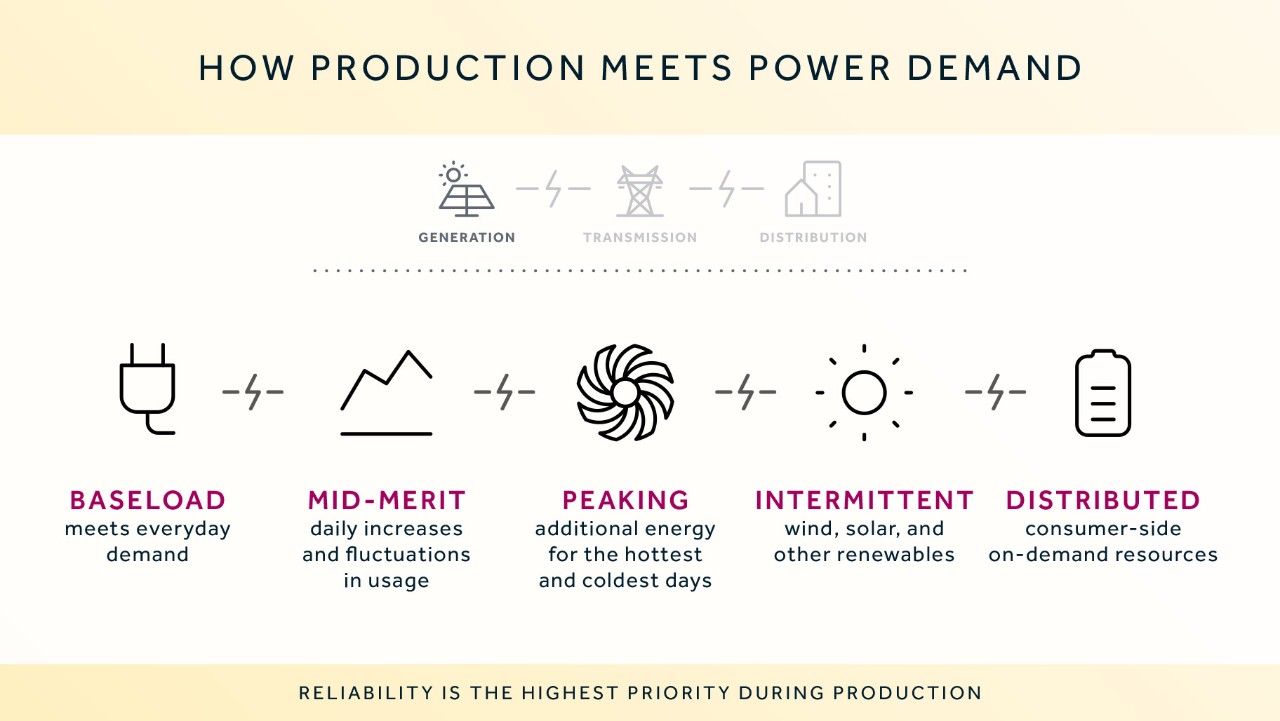
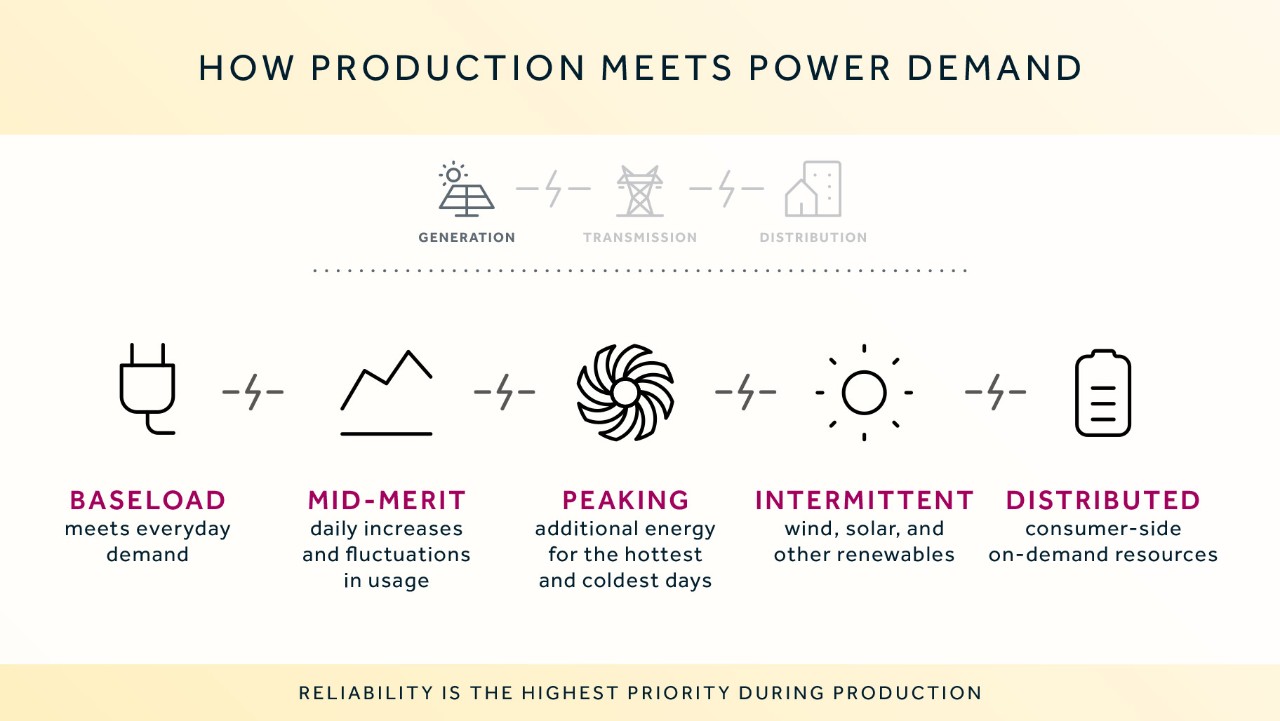
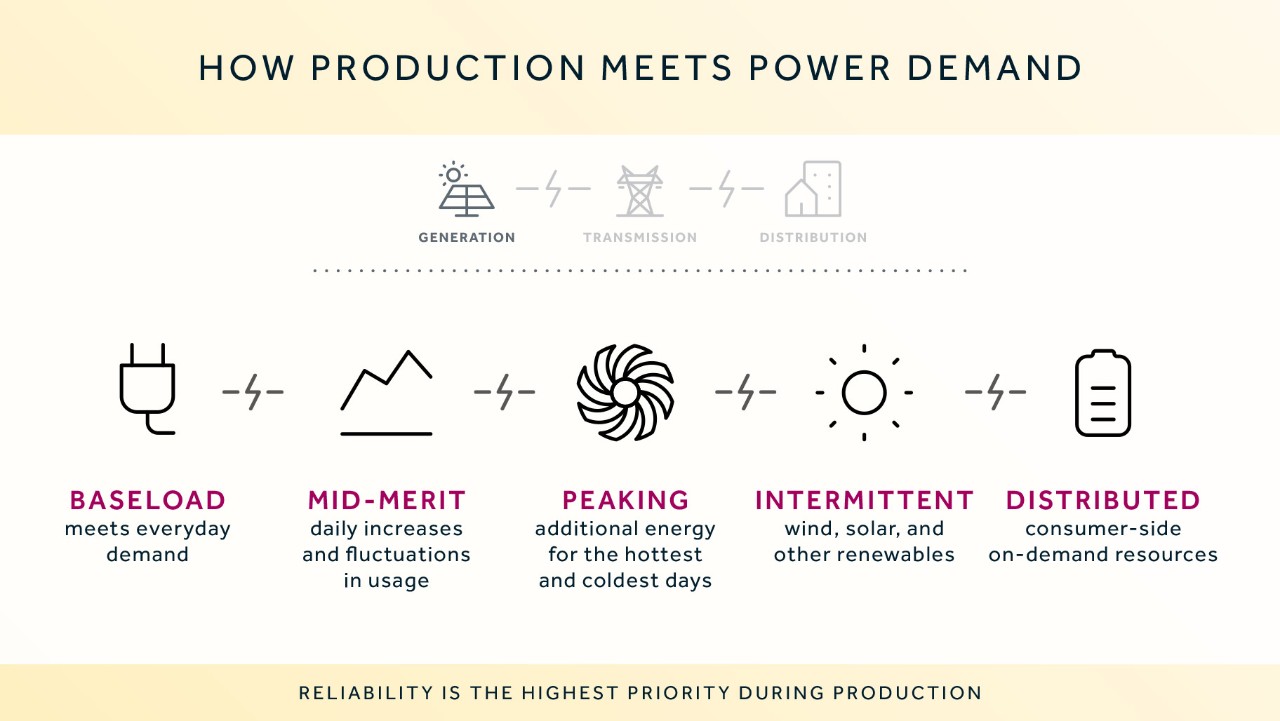
Ensuring that our lights are always on, and electricity is always available is a key focus for grid operators. However, what goes into making sure electricity is reliable can seem complex. Ensuring production meets demand requires up to five different, but very important, types of power generation: baseload power, mid-merit power, intermittent power, peaking power, and sometimes the additional support of distributed power.
So, let’s start at the beginning and discuss how power generation works.
Before we jump in, here’s some energy vocabulary that will help in our discussion of electricity demand:
- Baseload: the minimum level of electricity demand required over a particular period, which could be a day, a week, or longer.
- Peak load: periods of high electricity demand—often lasting short periods of time—that require additional electricity generation to meet the needs of the grid.
Keep these terms in mind as we dive into the different types of power generation.
Baseload power
When discussing electricity generation, we must start with baseload power. Baseload power provides us with the bulk of the power we use daily. Whether it be your computer at the office or your light switch at home, this type of power generation is what ensures that your daily life has the right amount of electricity.
The resources used to produce baseload power are those that are consistently available and abundant. These characteristics ensure that baseload generators—such as nuclear and efficient natural gas plants—can always operate at maximum, or near maximum, output to meet energy demand.
As the grid continues to evolve, the resources used to meet baseload will continue to be what we rely on to meet our electric needs—24 hours a day, 7 days a week, 365 days a year—but will broaden and expand to include new technologies and approaches to power generation.
Mid-merit power
Throughout a typical day, the amount of energy we need changes. At 5 a.m., for example, energy needs are much less than late afternoon when temperatures rise, air conditioning use ramps up, and electricity demand increases. However, baseload power—which is usually at or near max production—is not prepared to meet these swings or fluctuations in use. This is where mid-merit generation comes into play.
In meeting electricity demand, mid-merit power fills in the gap between baseload power—which is constantly generating—and peaking power—which provides power during unexpected peaks in demand. This type of power is produced at plants that run during periods of increased usage throughout the day—most often during the day and evening when we are hustling and bustling through our daily lives—and are then curtailed during lower demand times, such as during the night and early morning.
What distinguishes these types of generators from their baseload counterparts is their ability to adjust their electricity output relatively quickly.
These types of plants are typically flexible natural gas generators. As renewables continue to increase in efficiency and are paired with battery storage capacity, mid-merit generation is expanding to include solar thermal, hydrogen fuel cells, wind power plants, and other renewable resources as they become efficient and affordable alternatives to traditional resources.
Peaking power
When demand increases, beyond the fluctuations that are expected on a day-to-day basis, we turn to peaking power, which provides an additional energy cushion to guard against both expected and unexpected peaks in usage. Most often these peaks occur during extreme weather—increased air conditioning use during a heat wave, for example.
Peaking power refers to flexible power sources—most commonly natural gas, or diesel generators— which can be tapped quickly when needed to supplement baseload and mid-merit resources. These resources are categorized as on-demand and are often expected to come online with little delay, often at a moment’s notice.
Regardless of the energy source or the need, peak power is almost always a more expensive option. Its added price is accepted and enabled to encourage power suppliers to bring power to the market on an as-needed basis to ensure system reliability.
Intermittent power
With the increasing focus on climate change and innovation changing our approach to generation, there has been a shift toward renewable resources and clean energy. Though some renewable generation—like hydropower—have been baseload resources since the advent of the electric grid, more recent additions such as wind power and solar power, are referred to as intermittent because they only provide power when the wind blows and the sun shines. We can’t choose when they contribute to the grid.
The inclusion of intermittent power to the grid has helped decrease energy costs while greening our electricity. However, its intermittent nature means we’ve needed to become better at forecasting its output and developing a flexible grid to compensate for when intermittent power is unavailable.
Distributed power
As technology evolves and innovation continues, the grid becomes more complex and adaptable. On-demand sources like battery storage, distributed generation, and energy management mechanisms like demand response are adding capabilities that make the grid more diverse and flexible.
Distributed power is a decentralized approach to power where smaller generating units produce electricity near the point of consumption, i.e. office buildings, college campuses, hospitals, or even near your home. Distributed resources include microgrids, backup generators, or even solar panels. These options provide energy users with more choices about where their energy comes from, cost control and reduce their overall dependence on the power grid. When connected to a smart grid, distributed power helps to diversify the resources available and provides opportunities for energy users to not only disconnect themselves from the larger grid during periods of high demand but also gives them the opportunity to serve as an additional power resource during peak usage times.
While the role of distributed power is continuing to be developed by the institutions and mechanisms that manage the nation’s electricity infrastructure, new technologies are creating a new outlook on power.
An appropriate mix of fuels helps keep power reliable, affordable, and adaptable. With power needs met by baseload, mid-merit, and peaking power, Independent Service Operators (ISOs) work to maintain the balance between generation and load. This focus on reliability allows us as consumers to give little thought to our electricity.
Want to learn more? Browse the rest of our blogs in the series below and continue your journey to demystify energy.
Continue to the next article in this series: Fueling electric generation

Share on