











The journey of electricity: transmission and distribution
The journey of electricity: transmission and distribution
It’s easy to think of electricity as simply power generation and consumption, but electricity requires a few more steps to get from production to your home or business.
Once generated, electricity must travel from point A, generation, to point B, the user. This power distribution is achieved through a two-step journey called transmission and distribution. Referring to the different stages of electricity traveling over poles and wires, transmission and distribution are often referred to collectively as the power grid — the two systems key to bringing electricity to us.
Electric power transmission
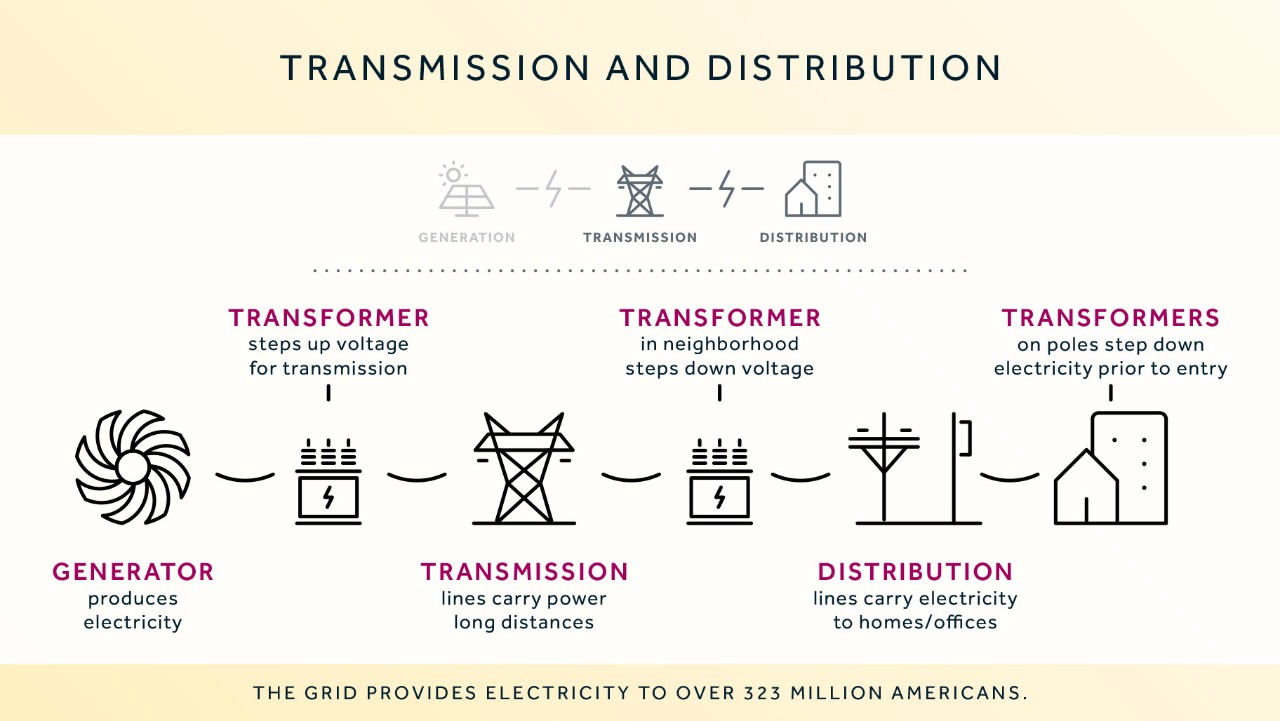
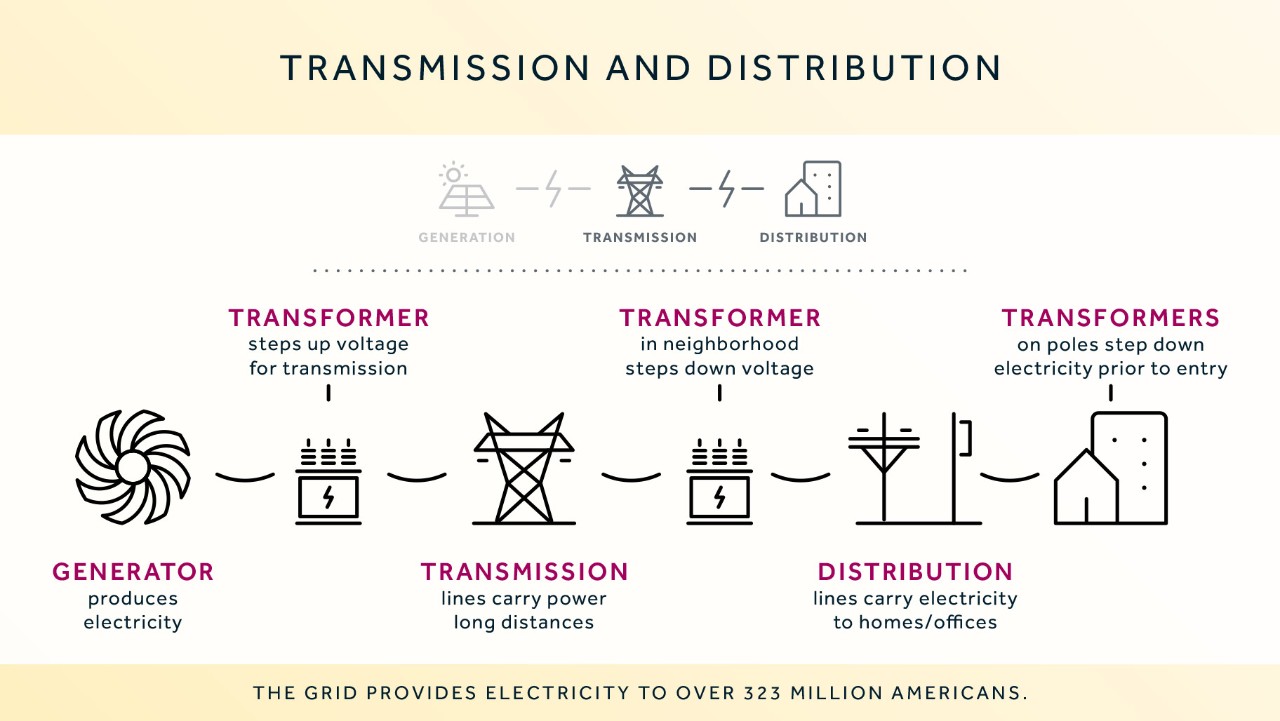
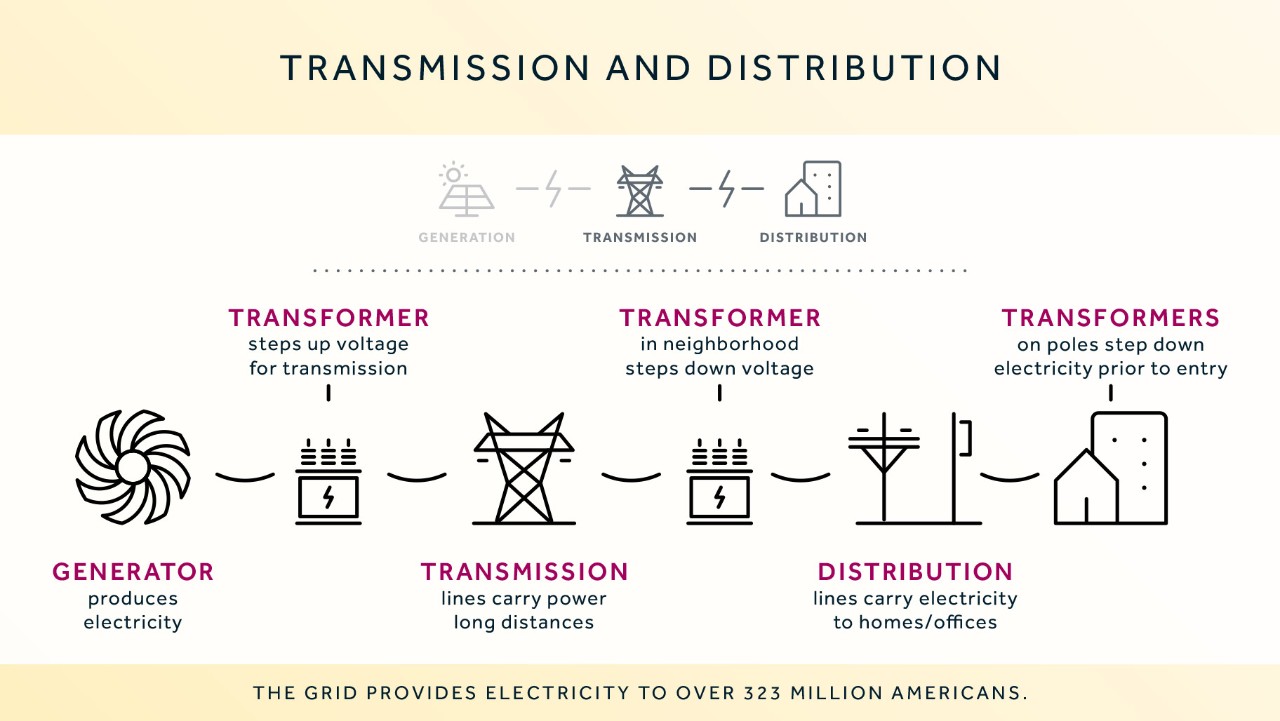
Once power is produced, it is time to send it to its destination—where electricity can be used by us, the consumer. The first leg of this journey, and the longest, is transmission.
Dubbed the “interstate highway of electricity,” transmission is the part of delivery where electricity is moved in bulk, quickly, across long distances to areas of demand. Large amounts of high-voltage electricity move across a series of tall poles and towers, wires (referred to as transmission lines), transformers, and substations, all of which work together to handle the transmission of electricity across the grid.
Electric power distribution
If transmission is a highway, distribution is like the local roads that wind through our neighborhoods. The high-voltage power that speeds across transmission lines throughout the country is like a speeding car, holding more power and force than a local street can take. It is distribution that makes electricity usable and deliverable.
To be used by a device, in a home, or in a business, electricity must undergo a step-down process through the distribution system in which its voltage is gradually reduced. Sent through a series of transformers, the electricity then enters distribution lines which funnels electricity to us. These lines are the last leg electricity takes on its way to our homes and businesses, and with this, the basic journey of electricity is complete.
With this, the basic journey of electricity is complete. We could easily stop here in our discussion about how electricity works — at least mechanically — but as technology evolves and power continues to be reimagined, the energy process has become more nuanced and customizable. And that’s what we will discuss next.
Learn more about how we provide various clean and renewable energy solutions to our customers.
Continue to the next article in this series: The evolving grid: modernizing energy

Share on