











Fueling electric generation
Fueling electric generation
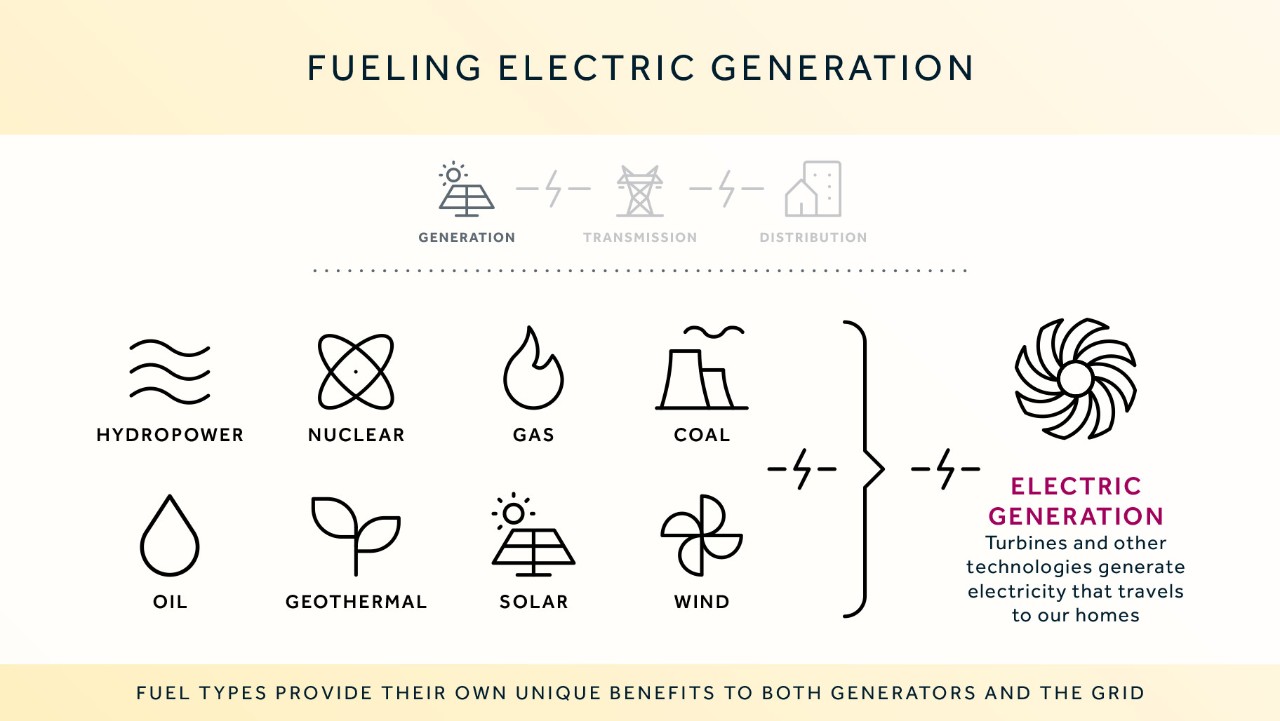
We rely on electricity daily. Ensuring that it’s ready when needed requires tools, manpower, resources, and a reliable primary fuel source. Whatever the fuel type, the energy sources used to generate electricity have unique attributes that contribute to meeting demand.
Some of the primary sources used for electricity generation are:
- Coal
- Natural Gas
- Oil
- Nuclear Energy
- Hydropower
- Wind Energy
- Solar Power
- Geothermal Power
How electricity is generated
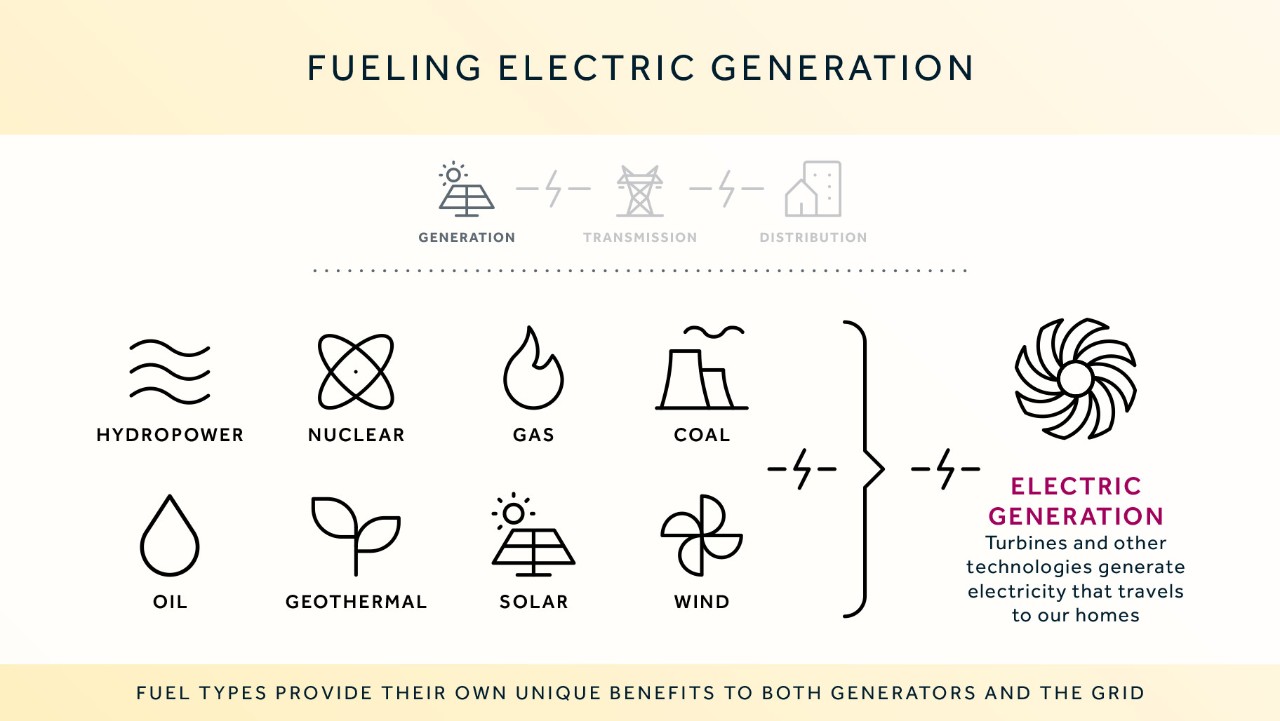
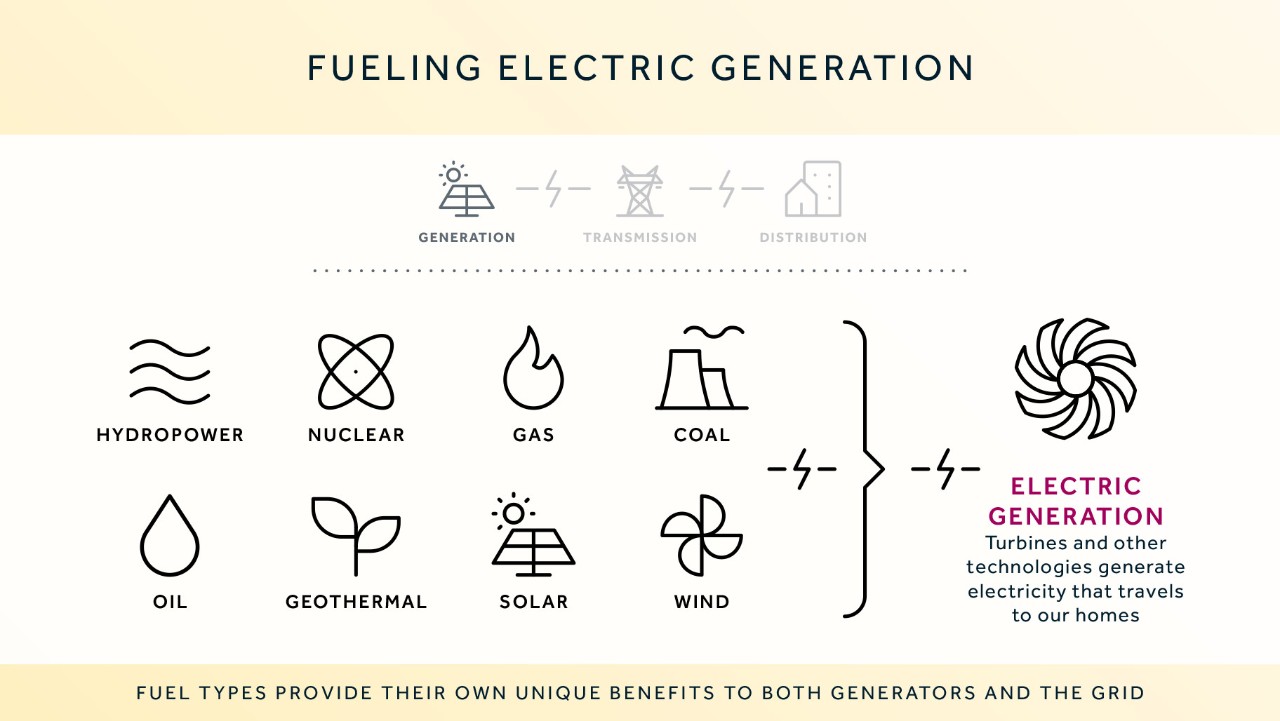
To produce electricity, a primary resource is used to turn a turbine which generates electricity. Whether this is achieved by creating steam or by capturing a naturally occurring phenomenon — i.e. wind or water — is dependent on the fuel source. Each source is characterized by a unique set of pros and cons, which allows them to be effectively used together to meet electricity demand consistently and reliably.
Determining fuel mix
“Fuel mix” refers to the different amounts of each fuel, whether nuclear, natural gas, or renewable, that contribute to generating electricity for our homes and businesses. Utilizing a variety of fuel types allows the grid to meet demand with the sources best suited to its needs. The mix is determined by various factors, including cost, availability, accessibility, reliability, and resource characteristics, which makes it malleable and adaptable to the grid’s unique regional needs.
For a good example of fuel mix and how it is calculated, you can see a national view of fuel mix here.
Though the process involved in producing electricity and the characteristics of producing it vary, different fuel types help the grid best meet the needs of consumers. To continue your journey to demystify energy, browse the rest of our blogs in the series below.
Continue to the next article in this series: The journey of electricity: transmission and distribution


Share on