











How to make renewable power part of your energy mix
How to make renewable power part of your energy mix
Many residential and business energy users want to use renewable energy to decrease their carbon footprint. Why? In many situations, renewable energy can also help homes and businesses save on energy costs and increase the reliability of their energy supply. For example, distributed renewable energy resources (DERs) like solar panels with battery storage systems that serve homes, businesses, or local communities can keep the power on, even if the grid is out.
In addition, businesses’ sustainability goals — no longer a nice to have, but a need to have — have led to the increased adoption of renewable energy both as a way to make progress towards environmental and emissions goals, but also as a reputation builder, as more and more stakeholders consider climate change a top concern. Homes and businesses have many options to secure renewable energy.
Renewable energy for businesses
In general, there are five options for businesses to transition to an energy supply with more (even 100%) renewable energy.
1. Renewable energy certificates (RECs)
The U.S. Environmental Protection Agency defines a REC as a “market-based instrument that represents the property rights to the environmental, social, and other non-power attributes of renewable electricity generation.” RECs are issued when one megawatt-hour of electricity is generated and delivered to the electric grid from a renewable energy resource. RECs represent the largest segment of sales of voluntary green power. About 197,000 customers bought about 110 million MWh of “unbundled” RECs in the U.S. in 2022. An unbundled REC means the purchaser gets credit for using one MWh of renewable energy, but they don’t get the actual electricity generated. Businesses can purchase unbundled RECs through their electric utility or a certified REC broker. RECs are generally popular because they are affordable and readily available.
Renewable energy plans
At least 50% of residential and business energy consumers have the option to purchase renewable electricity directly from their power supplier, according to the U.S. Department of Energy. Many regulated utilities today offer 100% green power options to customers at a small rate premium, while retail energy providers in competitive markets offer an array of renewable energy supply products that can even cost less than a standard energy contract. Through these energy supply plans, electricity providers agree to buy and supply as much renewable energy as renewable plan customers use.
2. Power purchase agreements (PPAs) and virtual power purchase agreements (VPPAs)
A power purchase agreement (PPA) is a long-term contractual agreement under which a seller of electricity agrees to provide a buyer with electricity, often specifying the generation source, such as a particular solar or wind farm. PPAs allow companies to negotiate a price for renewable energy and other contract terms directly with a project developer, which can help them achieve energy savings and other goals immediately.
Types of PPAs include:
- Onsite PPAs, in which a renewable energy system is installed at a company site for little or no cost. The system is typically owned and operated by the party listed as the seller in the PPA, not the business where the system is located.
- Offsite PPAs, in which the renewable energy project is not located at a business-owned site. Offsite PPAs are typically made by large energy users for renewable energy from large projects.
- Virtual power purchase agreements (VPPAs) are similar to onsite and offsite PPAs (known as physical PPAs). However, the energy output is not delivered to the business. Instead, the project owner sells the energy produced to the market. Businesses may choose to join a VPPA to gain the RECs produced by the project for their own consumption while selling the electric supply produced by it for a profit. Of course, if the power is sold for less than the contract price, the business is required to pay the difference to the project owner.
3. Community solar
Community solar allows businesses to buy or lease a portion of a solar project and then receive a credit on their electric bill for the electricity generated by their share of the community solar system.
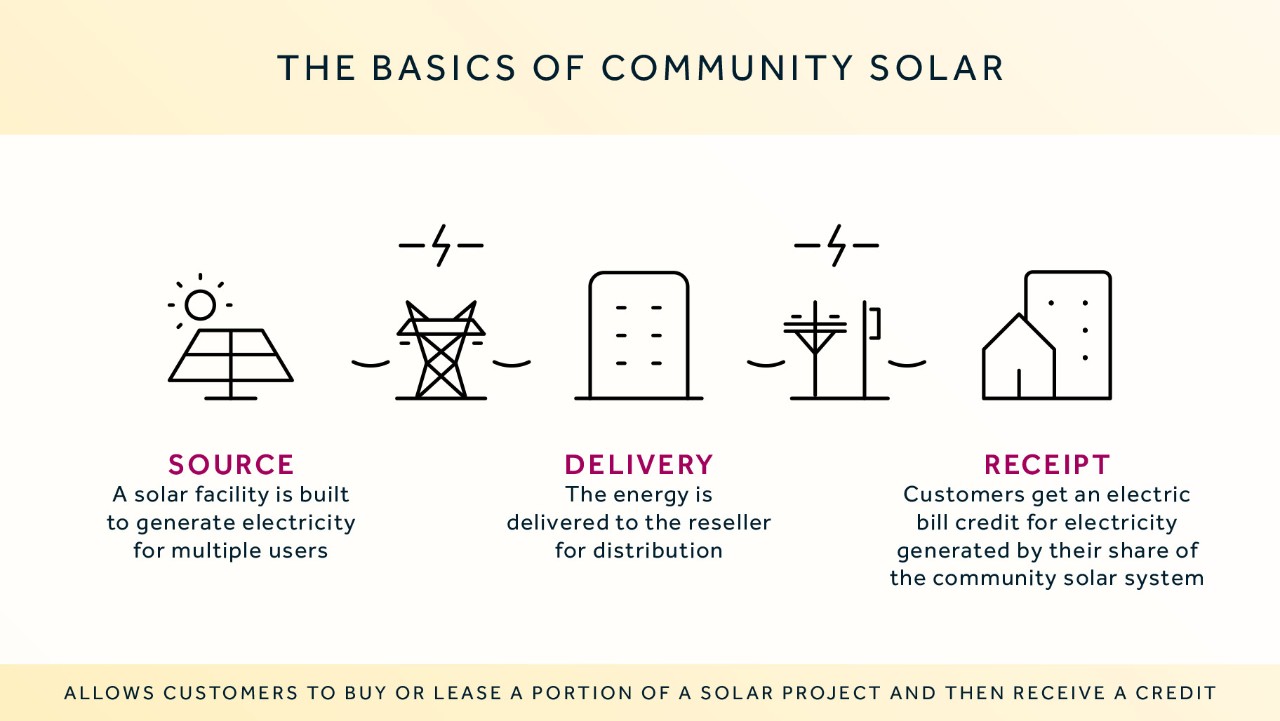
Community solar is highly dependent on state and local rules being in place to make these projects feasible. Currently 22 states have legislation that encourages or mandates community solar in their jurisdictions while there are 43 community solar projects.
4. Onsite renewables and renewable leases
Solar is the most popular type of onsite installation, but other technologies like biomass generators, battery storage systems and fuel cells can also fit a company’s needs.
Businesses have the option to own their installations or sign a lease agreement for a system built onsite by a renewable energy developer. Under a lease, a developer typically installs a system onsite at little to no upfront cost to the business. Then business then pays a flat monthly fee over a term, at the end of which the business owns the system.
While an onsite system is often the first option businesses think about, installing one is a complex decision that is only economic in the right market and local climate conditions. The choice to install a system should only be made after careful research and consultation with a trusted energy adviser.
Renewable energy for homes
Residential energy users have a variety of options for renewable energy, but there four are the most common.
- While PPAs and VPPAs aren’t typically on the table, homeowners can voluntarily buy RECs as a way to reduce their carbon footprint and support the renewable energy market.
- Residential customers can also choose renewable energy supply plans through their retail electricity provider or utility, where available. NRG brands offer a variety of options including Make it Solar, carbon offset, and EV support plans, and many energy companies are developing renewable energy plans to help home customers transition.
- Distributed Energy Resources (DERs), outlined in the first edition of the Demystifying Energy Series, are also a viable option for many homeowners. The most commonly used and accessible DER for residential users is rooftop solar, but there are many other options available including wind, micro hydropower, and hybrid systems that can help customers produce their own renewable energy.
- For those who wish to avoid installing renewable power generation, community solar is available in some areas, allowing people to buy or lease a portion of a community system and receive a credit for the energy generated on their electric bill.
Explore renewable energy plans with a trusted energy partner
As renewable energy becomes a priority for both homes and businesses, a variety of plans and options are becoming available to help customers meet their goals and needs. While transitioning can often seem complex, as the market and energy industry modernizes and evolves, retail energy companies and utilities continue to find new and innovative ways to make it easy and accessible for customers to choose renewables. At NRG we provide the resources you need to select the right energy plan for you. Partner with us today to learn more.
Share on