








Who sells your energy?
A 101 on wholesale and retail electricity markets
Who sells your energy?
A 101 on wholesale and retail electricity markets
Electricity doesn’t flow directly from a power plant to your home or business. Not exactly, anyway. There are a few intermediaries along the way that create, manage, and participate in different types of electricity markets to make sure there’s enough power flowing through the electric grid to safely and reliably serve every customer.
Wholesale versus retail energy markets
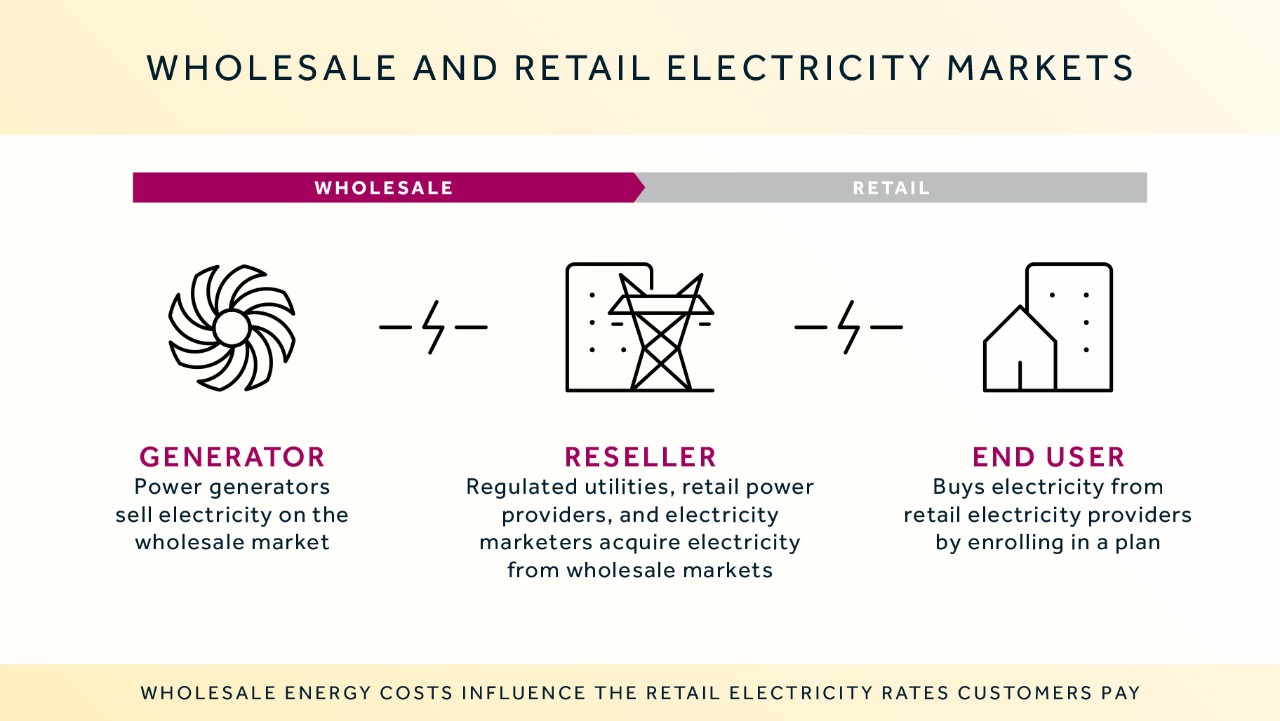
In most states, power generators—companies whose power plants are responsible for most of the electricity delivered to homes and businesses—sell their electricity on what are called wholesale markets.
In these regional wholesale markets, generators can sell their electricity as it is generated on a spot market or sell expected future generated electricity on a futures market. When demand is high and there’s not much electric supply to spare, prices on spot markets can soar. These prices also rise and fall on the futures market, but this fluctuation is based on long-term expectations for power supply and demand as well as the cost of fuels used to generate electricity as opposed to on-the-spot demand.
Wholesale energy
Wholesale energy costs can influence what you, as a customer, eventually pay on the retail level. However, energy end-users — homes and businesses — don’t usually buy their electricity on a wholesale market. Who does? Collectively, they can be referred to as retail electric companies: regulated electric utilities (that is, the local utility that also owns the poles and wires to deliver the electricity to your house), competitive retail power providers, and electricity marketers.
Retail energy
Retail electric companies secure the correct amount of power supply on the wholesale market for their residential and business customers. When electricity providers supply power to customers, they sell it to them through the retail electricity market, and then regulated electric utilities deliver it to customers’ homes and businesses.
Which type of retail electric company serves you depends a lot on where you live and what rules and regulations exist in your state.
Competitive retail versus regulated utility retail markets
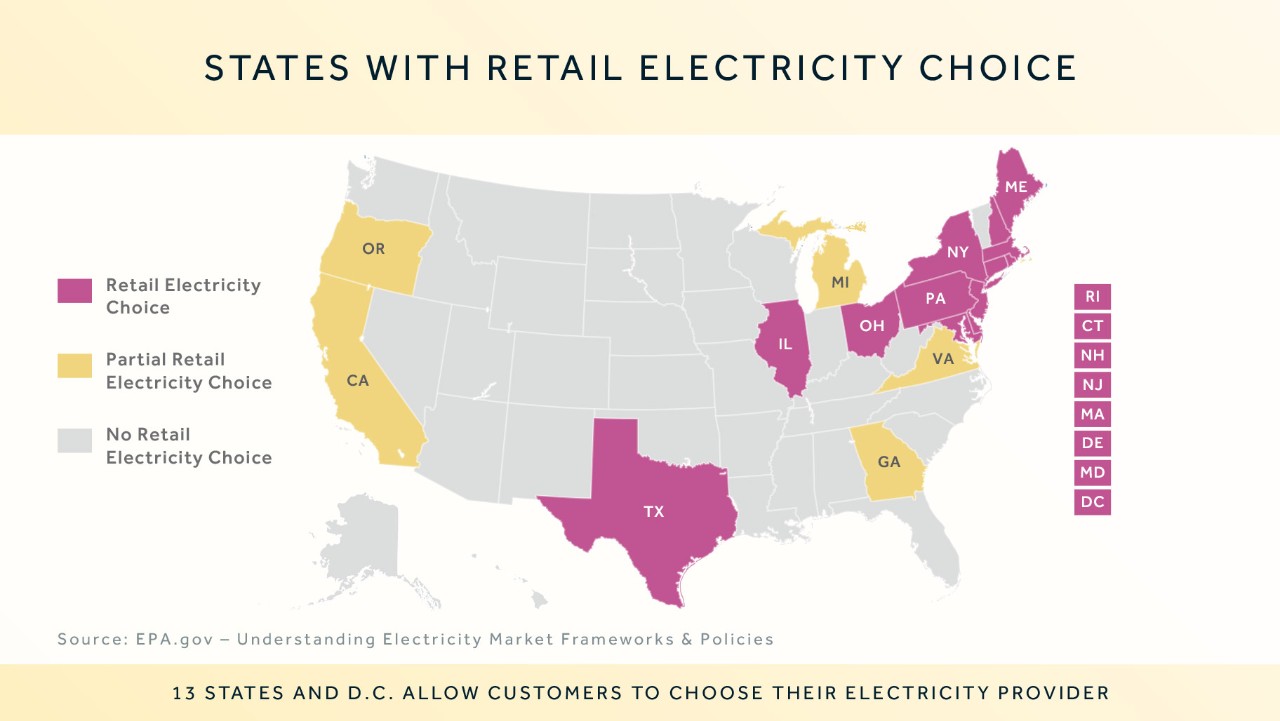
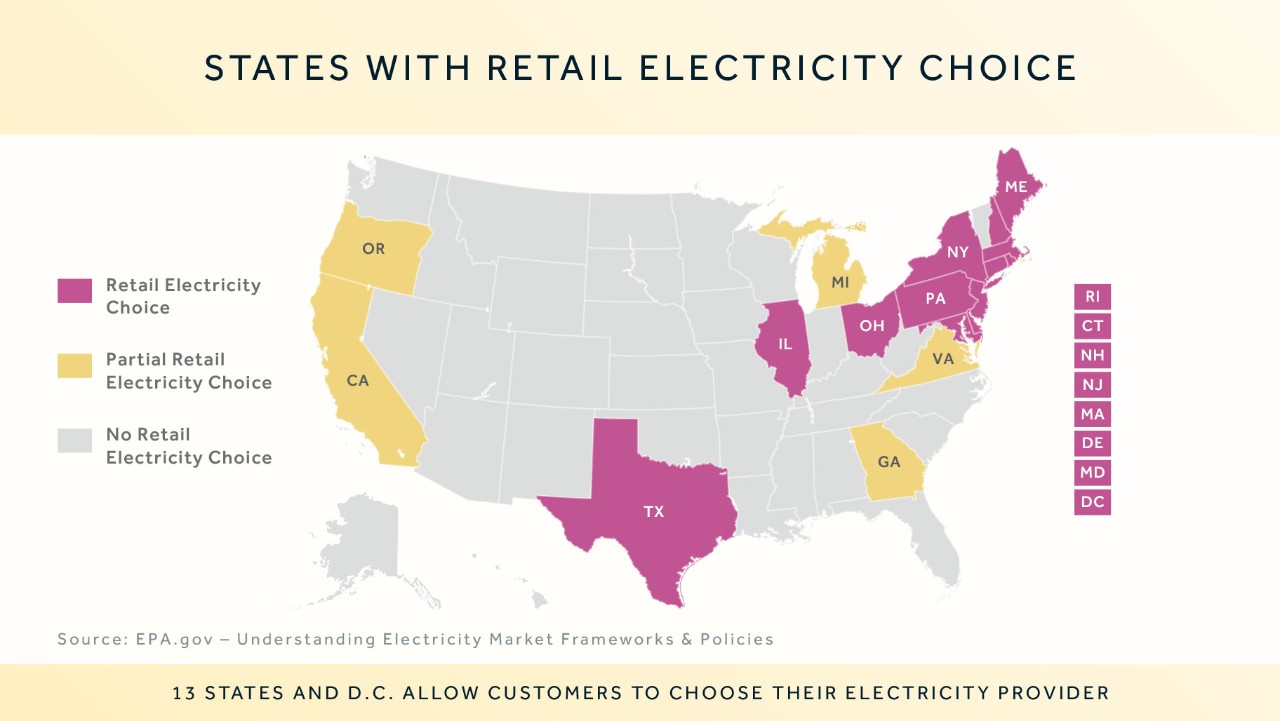
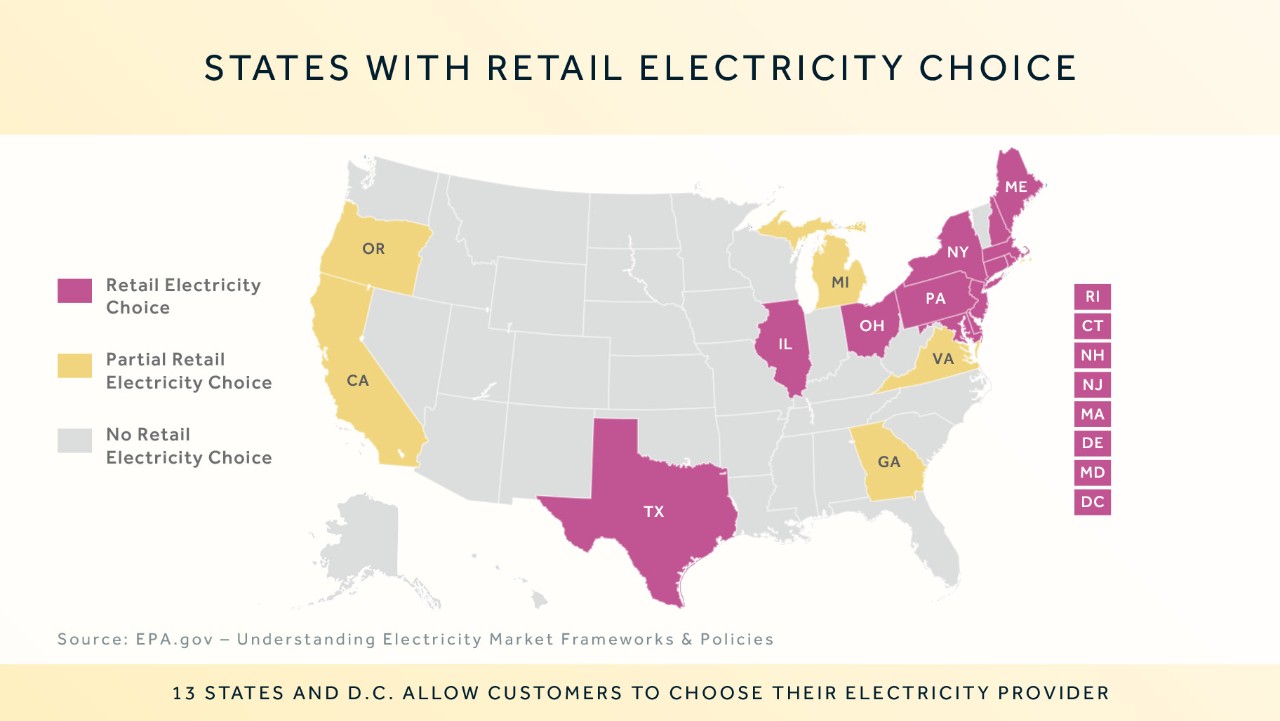
If you live in a state like Nebraska or Florida, you might be wondering why you don’t have the opportunity to choose your electricity provider. Many states have a regulated market, meaning just one retail electric company can serve customers in distinct geographic boundaries known as service territories. In exchange for not having to compete for customers, these companies are closely regulated by state governments, which act as advocates for utility customers.
However, 13 states permit customer choice for all residents and businesses through a competitive retail market. Texas and New York are the largest of those markets. In these competitive retail markets, homes and businesses may be able to choose from dozens of retail electric companies.
The local utility is still responsible for delivering the electricity in these markets, but the retail electric company a customer contracts with is responsible for providing that customer’s electricity.
Choosing the right plan for you
Many retail electricity companies offer options. You can sign up for standard power from the grid or renewable energy, or a plan that charges different rates based on what time of day you use electricity. You can also sign up for electricity at a fixed rate that will give you price certainty over the life of the contract, or a month-to-month contract that you can leave at any time.
While retail electricity providers offer a variety of plans to help customers meet their needs, these plans often fall into one of three categories: fixed, variable, and indexed. Fixed-rate plans charge the same rate per kilowatt hour (kWh) of electricity (or, sometimes, per month) for the term of your agreement, which protects customers from the ebb and flow of wholesale market prices. Variable rate plans have rates that vary from month -to -month based on long-term market trends, which allows customers to gain benefits from changes in the market while insulating them from unexpected turbulence. Lastly, there are indexed rate plans, generally only available to large commercial and industrial customers, whose rate is algorithmically tied to a wholesale market price. When rates are high customers on these plans can be greatly impacted, but when rates are low customers’ bills reflect this change in cost.
Understanding your energy plan
Whether you’re served by a regulated utility or can choose your retail electricity provider, it’s a good idea to learn about the different plans they offer and get advice on how those plans will impact your energy bill across a range of scenarios. To learn more, partner with NRG today.


Share on