








Becoming fluent in electric vehicle charging
Becoming fluent in electric vehicle charging
I grew up in Canada where there are two official languages: English and French. I studied French throughout high school and assumed I had a working level of the language. Imagine my surprise when I first traveled to France and pulled out my skills only to be politely asked, “Do you speak English?”
How is it possible to grow up in a country with two official languages and remain mono-lingual? Well, my hypothesis is that the ambient French made me overconfident. I read the words and heard the language so often I assumed I could also speak it. That is, until my first trip to France when I realized that what I thought I knew and what I really knew did not overlap.
I cannot speak French.
My initial foray into electric vehicle (EV) charging was reminiscent of that experience. What I thought I knew and what I really knew were vastly different. Sure, I had years of driving a combustion engine. I knew how and where to refill my mid-life sedan, but that knowledge didn’t prepare me for EV ownership.
Getting used to a new way of thinking
The first step in your charging journey is an honest assessment of actual vehicle miles driven on a regular basis. Would it surprise you to learn that most Americans only travel 37 miles a day? The first thing I learned at the start of my journey was that I had zero intuitive knowledge of how far I drive in miles. I could tell you how many minutes I commuted, or how many gallons of fuel I put in my car, but not the actual miles driven in a trip, a day, a month, a year.
The fact is, it wasn’t necessary. I only needed to know to fill up when I reached a quarter tank. However, to be a confident EV driver, understanding this imperial metric is necessary. And now, after owning my EV for five years, I can emphatically state that understanding distance traveled in mileage is imperative to managing charging range anxiety.
Creating an electric vehicle charging plan
Understanding how far you travel in miles is the first term you need to master to become fluent in electric vehicle charging. Here are some others:
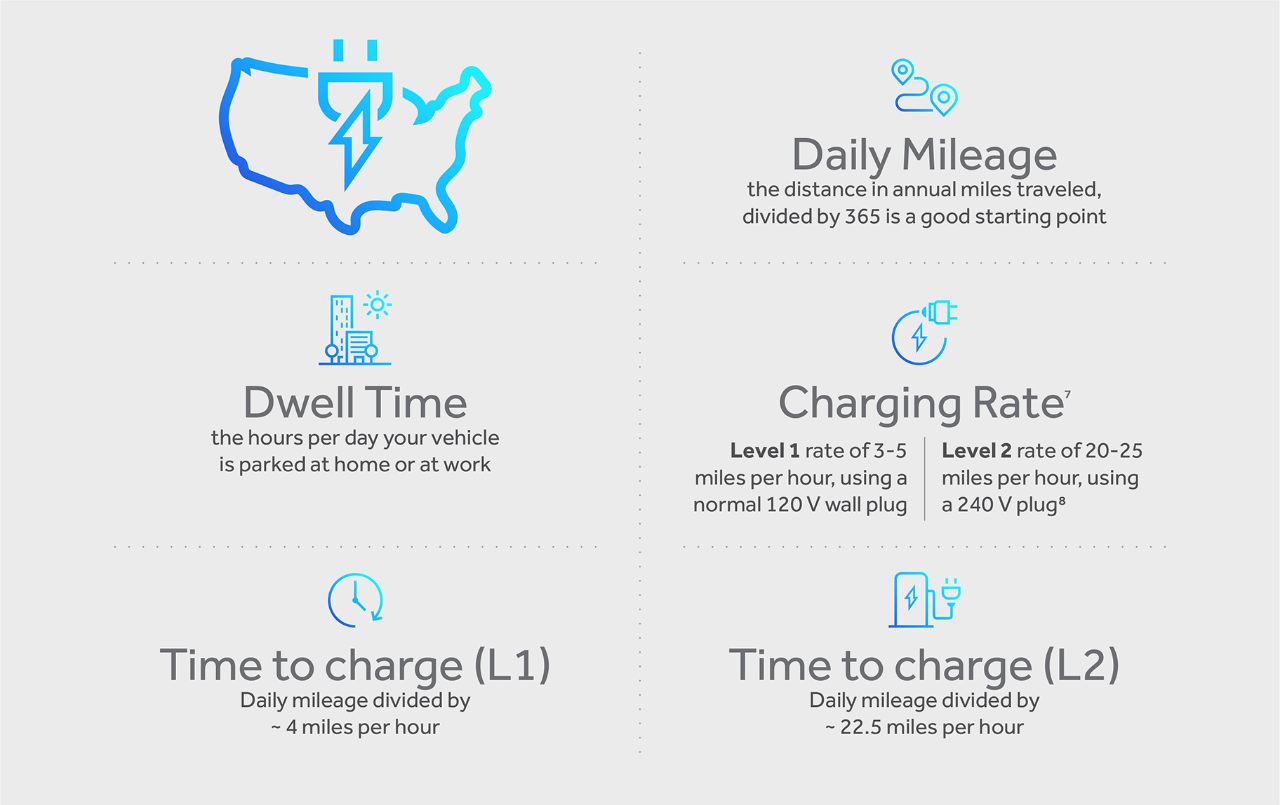
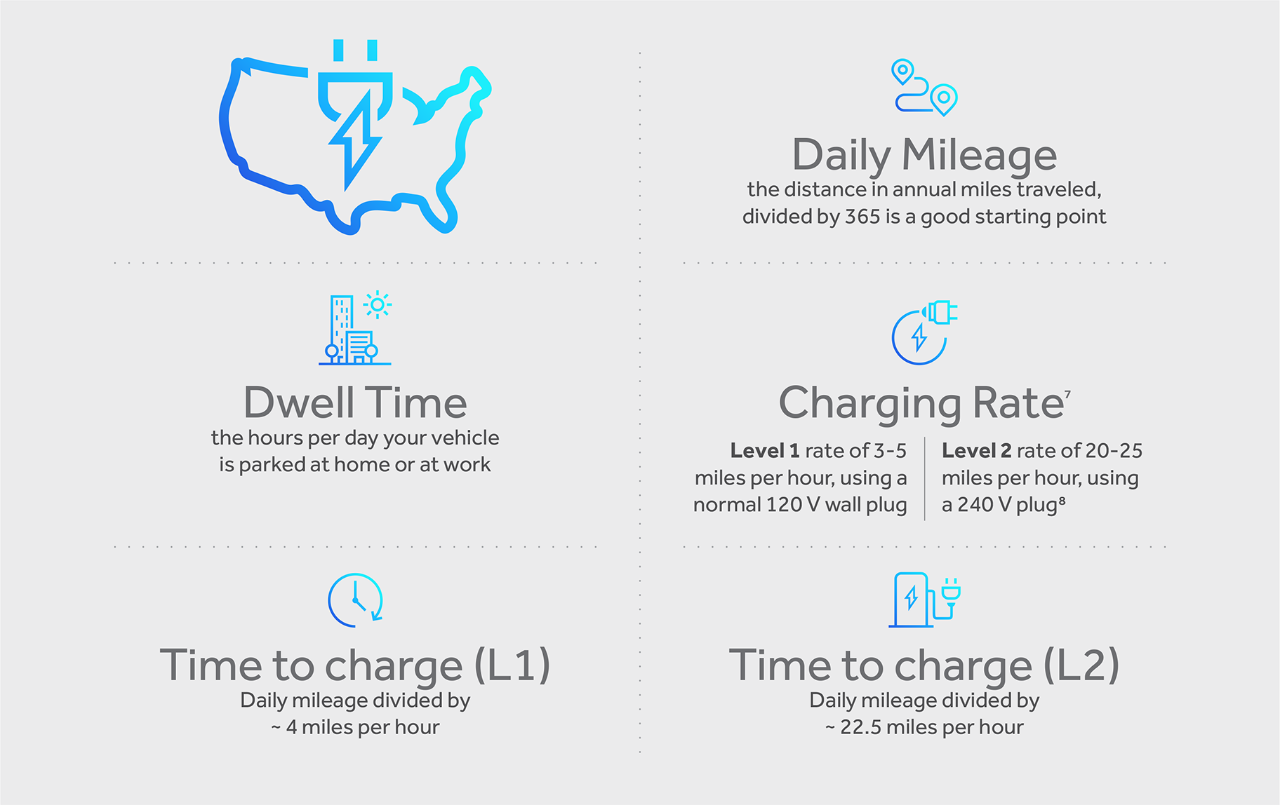
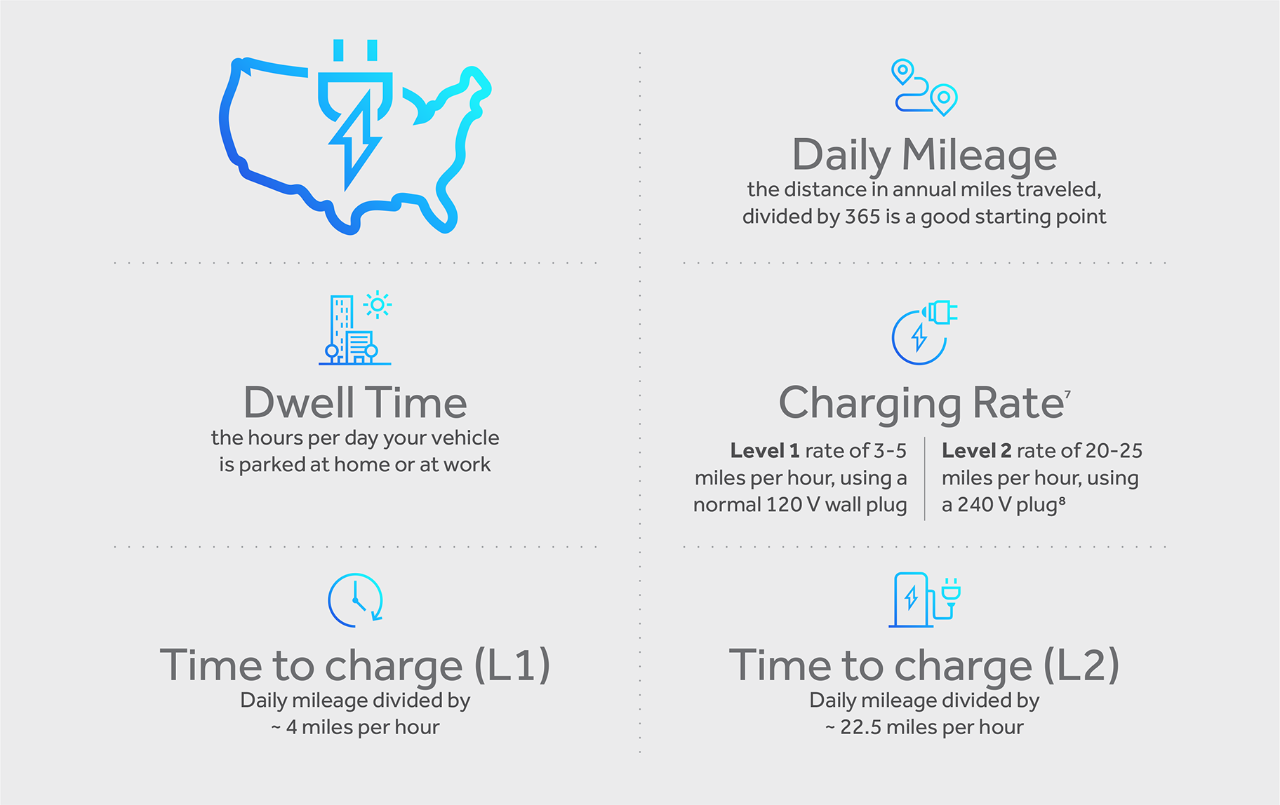
The average American’s commute of 37 miles a day needs about 9.3 hours of dwell time to charge (L1). The same driver needs about 1.6 hours of dwell time to charge (L2) using a 240 V plug.
When I started my EV charging journey, I knew NRG supplied Level 2 charging at the office and I knew buying a Tesla would give me access to the fast-charging system. What I failed to realize was that the 120 V plug-in in my home garage was all I needed to handle my day-to-day driving.
My dwell time at home, coupled with my 200+ mile battery, was more than enough to manage my daily trips. I thought I needed a bigger battery, a fast-charging network, and a level 2 charger, but all I really needed was 100 miles of range and the plug-in that came with my vehicle.
Creating and understanding your charging plan will allow you to make smart decisions about the chargers you need, where you’re traveling, and when you need to charge.
Pursuing electric vehicle owner
In getting a clearer grasp of the language of EVs, electric vehicle adoption seems a bit more accessible. The faster and more willing we are to adopt EV lexicon, the better prepared we will be for an all-electric future, and the more EV ownership becomes an informed choice — not an edict.
I hope you’re one step closer to understanding the possibilities and power of EVs. There is much more to learn, and I hope you will continue to join me as we dive deeper into charging and the world of electric vehicles. To learn more about my journey to EV ownership, particularly overcoming my assumptions and finding the car that best fits my life, see my previous blogs.


Share on