








Ohio utility rates are on the rise
Learn how your business could save over the utility's SSO
Ohio utility rates are on the rise
Learn how your business could save over the utility's SSO
In 2022, inflation and international factors put pressure on U.S. energy prices, causing volatility and rising futures pricing that peaked near the end of the year. Mild temperatures for much of the season caused natural gas supply and demand to loosen, which decreased spot and futures power pricing. In some cases, this has led to more favorable pricing for future contracts today than what you may have seen if you were receiving price quotes for the same timeframe near the end of last year.
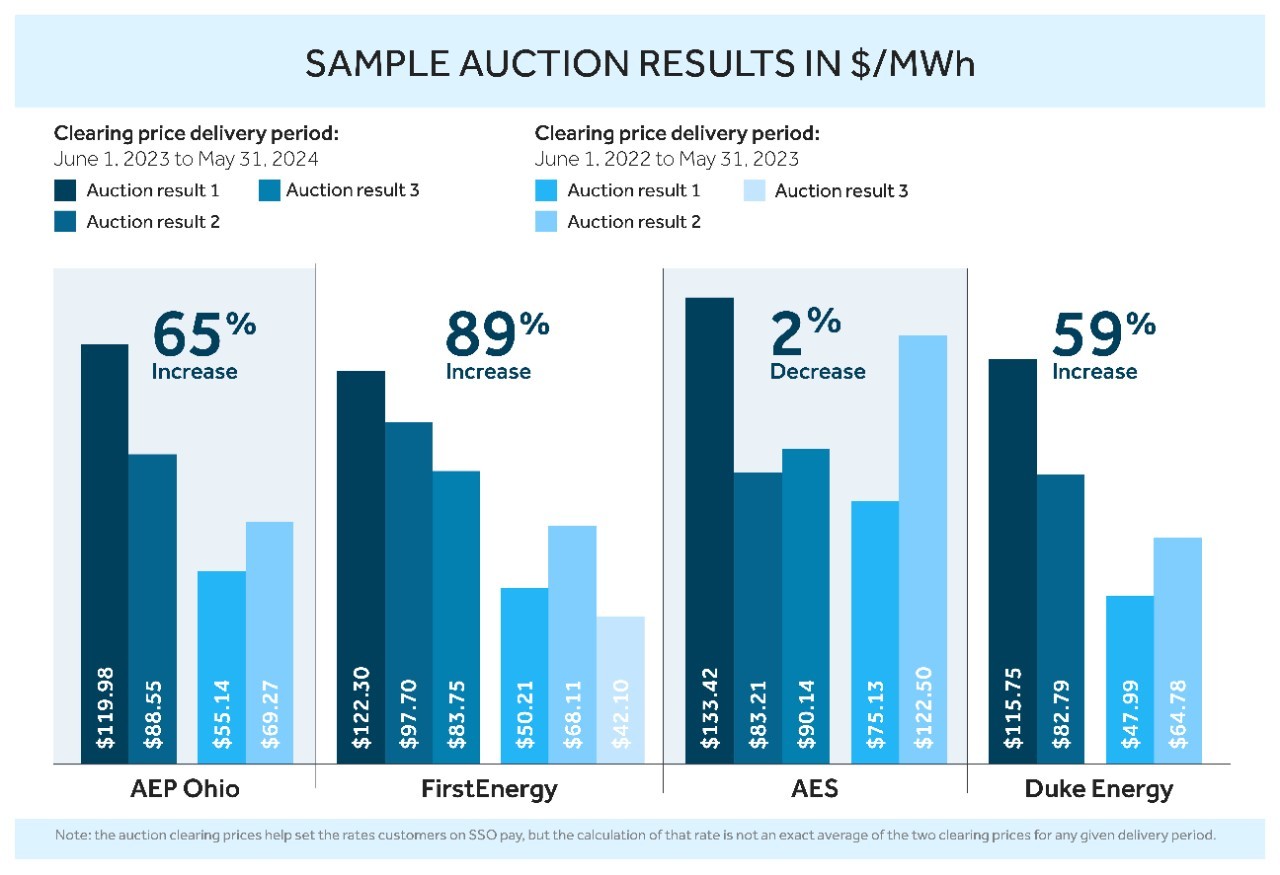
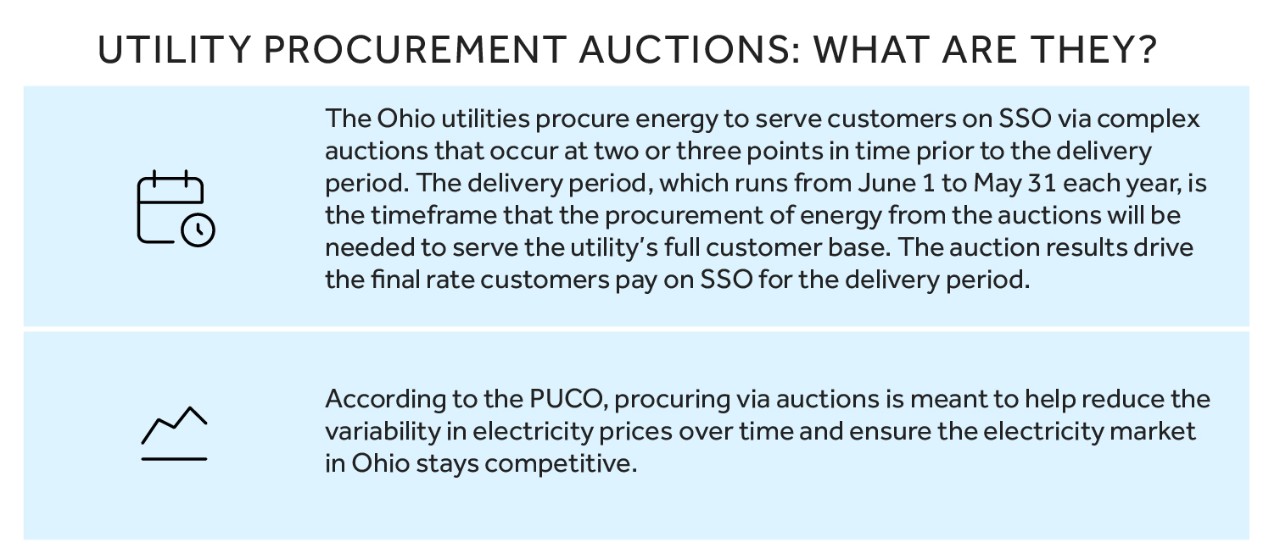
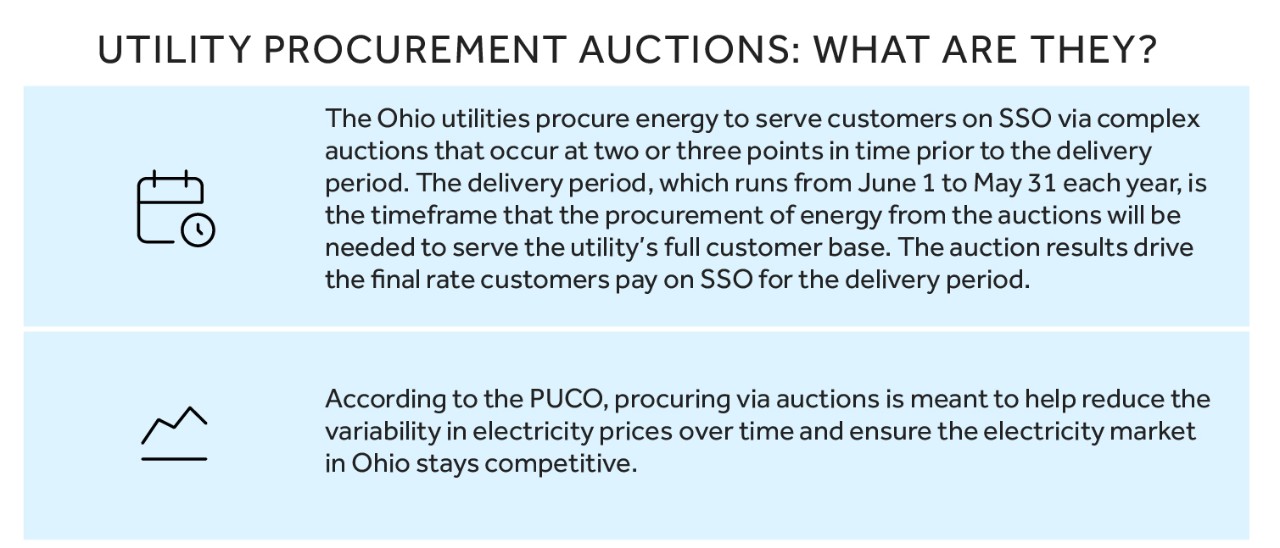
This shift in energy market dynamics also resulted in much higher year-over-year auction clearing prices for the Ohio utilities’ standard service offer (SSO), with initial procurements beginning late last year to set rates for the June 2023 - May 2024 timeframe. The high auction clearing prices impact the rates utilities charge Ohio customers who are on utility default service — not customers working with a competitive retail electric supplier (CRES). Based on the procurement results specifically from AEP Ohio, they are estimating that there will be significant increases to their generation rates.
Price, term, and why they’re important
As a business, when you’re considering your pricing options for your energy supply, you are likely going to be focusing on your pricing structure, as well as the term of your energy plan. You may also be considering who is supplying your energy and the differences between selecting a CRES, like NRG, or taking energy supply service from the local utility. One of the key data points that assists in this comparison is the utility’s price to compare (PTC) for its default service, or SSO. This is the $/kWh rate for your rate class that you’ll pay if you are receiving your electricity supply from your local utility. The auction results above will drive the final PTC for the June 2023-May 2024 delivery period.
A trusted energy supplier will be aware of the PTC and able to provide pricing quotes that allow you to make an accurate comparison. They will also encourage you to select utility service if it provides value. If a utility’s PTC is lower than prevailing energy market rates, it could point back to the fact that the utility procured the power to serve its customers in the months prior to the delivery period, during which time energy rates were lower. However, the reverse can also occur whereby the utility’s PTC is higher than prevailing market rates, which could be reflective of a market that is declining or has declined since the utilities completed their auctions for the delivery period.
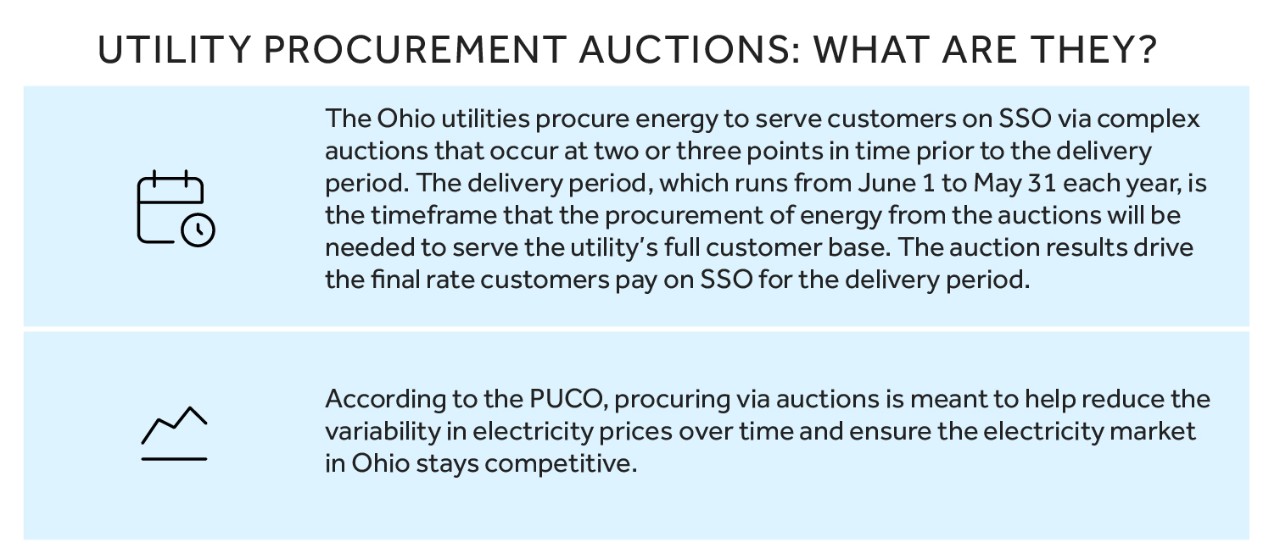
Due to the timing of the utility auctions — which take place a year or more in advance of the delivery period — and the changing nature of power markets in general, it’s always important to compare the rate for any contract term that starts now — or when you’re looking to start service — and your local utility’s PTC. There are differences however in how the utilities and suppliers offer electricity supply service so there is more than just price to consider.
Timing makes a difference
When the utilities procure power for their customers, it can impact the rates they’re offering, but the term of their service is also important when you’re comparing offers.
Term of service
Your local utility offers a $/kWh rate per rate class for a designated delivery period (June 1 to May 31) each year. You won’t have a line of sight into the next year’s rates until Q2 of the following year, or shortly before the next delivery period.
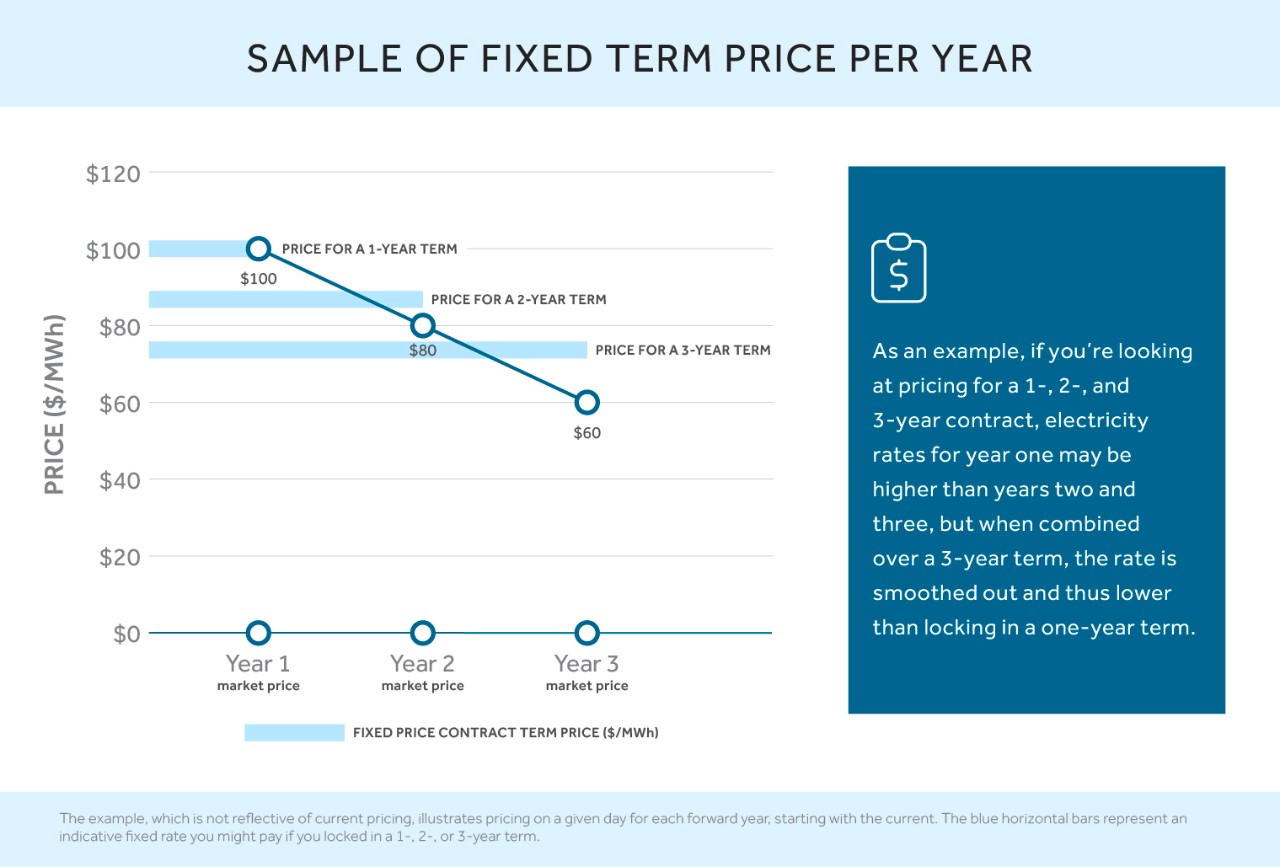
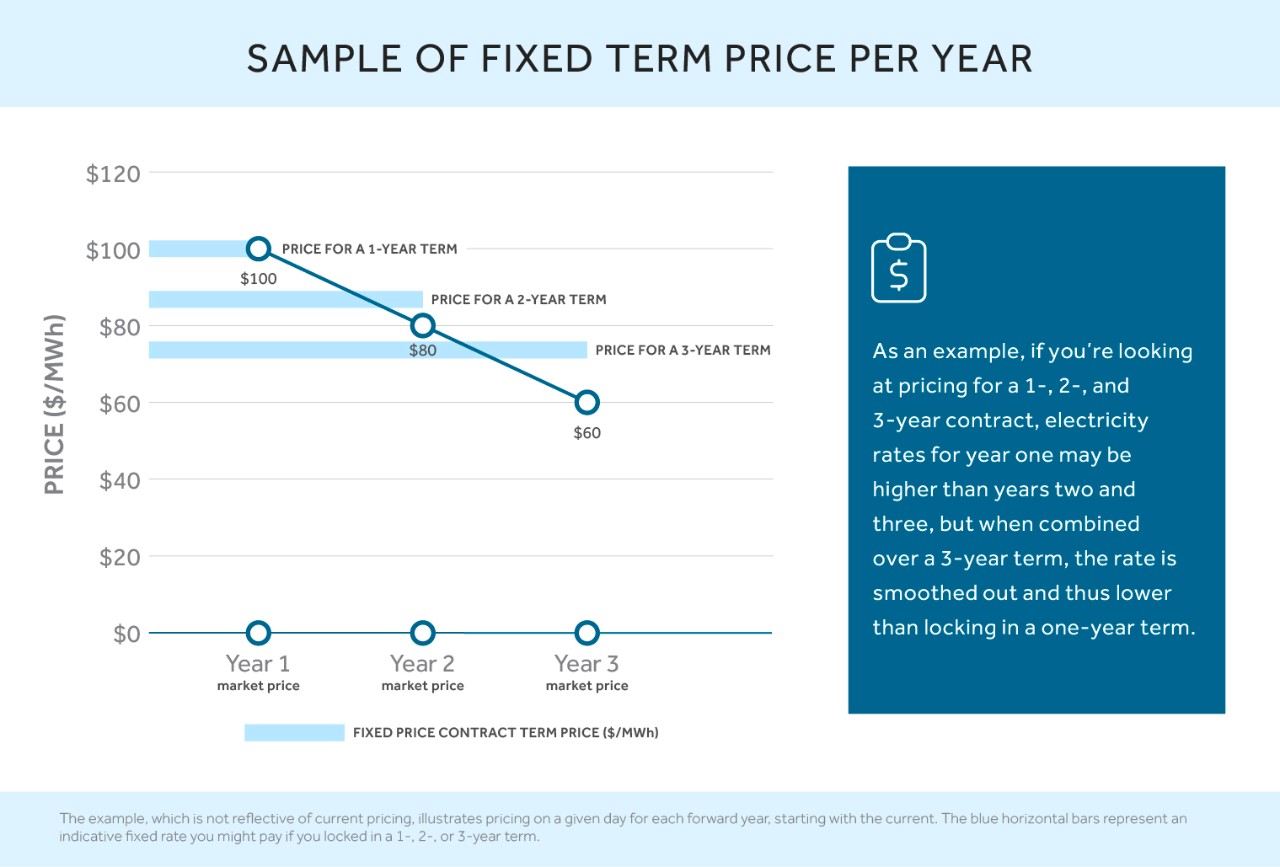
When you work with a CRES, they can provide price quotes for different terms so that you know now what you would pay if you locked in a rate today for one year, two years, three years, etc. Like with many purchases, you may find that committing to a longer term up front means a lower rate over the course of the term when compared to a shorter term. While utilities don’t change rates during the course of a year, flexible contract lengths from a CRES give you the opportunity to lock you in when there is a near- or long-term dip that, over the course of a 3-year contract term, could save you money on your energy bill.
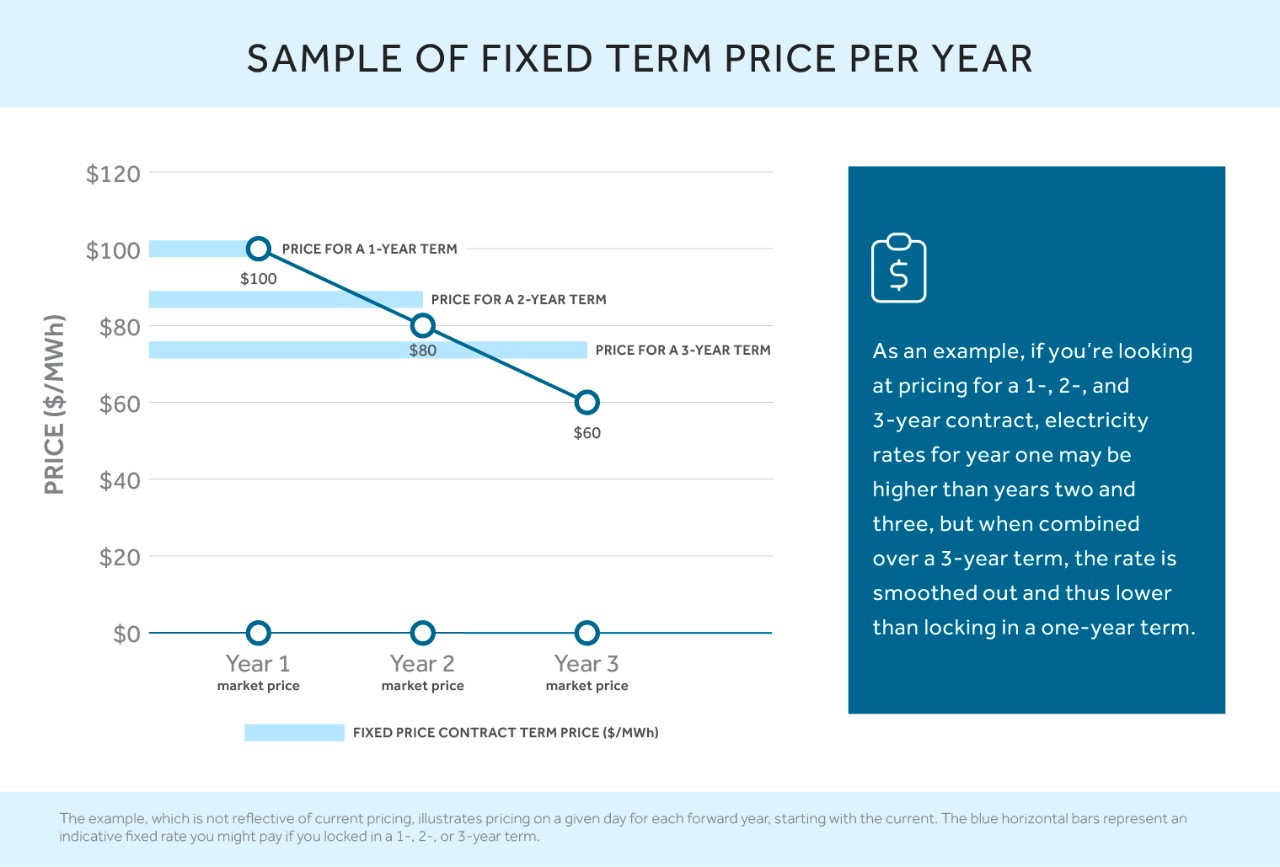
The impact of ‘when’ power is procured
One more angle to consider here is that the utilities procure their energy supply at specific times of the year. If the market is volatile or climbing during those procurement timeframes, their SSO rates could reflect that. A CRES has the flexibility to go into the open market at any given point in time to purchase power and provide a price quote for a unique length of time. This gives customers like you the flexibility to find a solution that works best for your business.
As an example, if the market is volatile, you may be better off locking in a portion of your requirements and waiting until prices stabilize before locking in the rest of your requirements at a fixed rate. This flexible strategy approach, which suppliers offer but utilities don’t, could help mitigate additional risk when market pricing is unfavorable. It can also help you save over the longer term by allowing you to wait to lock in additional portions of your energy needs when prices drop.
Switching to an energy supplier is up to you
In Ohio, you’re able to move fluidly between SSO and service with a CRES fluidly. There is no minimum stay period in order to switch from one to the other, short of any contract term and early termination costs you may be obligated to when you’re under contract with a CRES. This means that if you are taking service from your local utility and would like to compare your options today by obtaining quotes and potentially switching to a competitive supplier, you can.
A trusted sales professional can assist you in comparing the utility’s PTC against any price quotes you receive from suppliers to determine what’s best for your business. They can also help you identify the results of any auctions that have already been conducted to set rates for the utility’s next delivery period. Many times, when the utility rates are lower and a CRES cannot identify savings through current pricing and terms, they will advise you to go with the utility.
Currently, trends indicate that competitive supply options may be more advantageous than standard service offers so be sure to check with your sales representative to discuss your options.


Share on