








Purchasing strategies for New England market dynamics
Helping energy brokers match customer needs with appropriate opportunities in a high-priced market
Purchasing strategies for New England market dynamics
Helping energy brokers match customer needs with appropriate opportunities in a high-priced market
Buying energy for the New England winter has always been a challenging task due to high prices, volatility, and risk — and this winter is no exception. However, this year there may be more pressures driving prices up — like inflationary and international factors — and the spot gas and power prices we experience this winter could have a significant impact on future prices due to several key variables.
We’ll help you understand the fundamentals of New England’s high prices and provide guidance to help you better serve customers this winter and beyond.
The fundamentals behind New England’s energy market
New England is in a unique and challenging position when it comes to energy. In a nutshell, there is insufficient natural gas pipeline capacity to meet demand on peak winter days for both natural gas-fired power generation and heating load. In large part, this can be attributed to New England’s increased reliance on natural gas for electricity generation, and retirement of generation units that run off fuels stored on site, such as coal and oil, along with nuclear.
For example:
- In 2000, oil- and coal-fired power plants produced 40% of the electricity generated in New England, while natural gas produced 15%
- Starting in 2009, with the boom in domestic shale gas production and plummeting natural gas prices, gas-fired plants became a more economic option to meet demand first
- Since 2013, more than 7,000 MW of primarily coal, oil, and nuclear-generating capacity have or are planning to be retired
Today, New England’s energy generation mix is comprised of approximately 53% natural gas and 27% nuclear, while wind and solar combined account for 7%. Coal and oil combined are below 1% of the region’s generation mix.
On frigid winter days, when the pipeline capacity of gas is insufficient to meet demand, there are two primary alternatives to compensate:
- Displace some gas-fired generation by running oil generators (or switching dual-fuel generators from gas to oil)
- Secure liquefied natural gas (LNG) deliveries
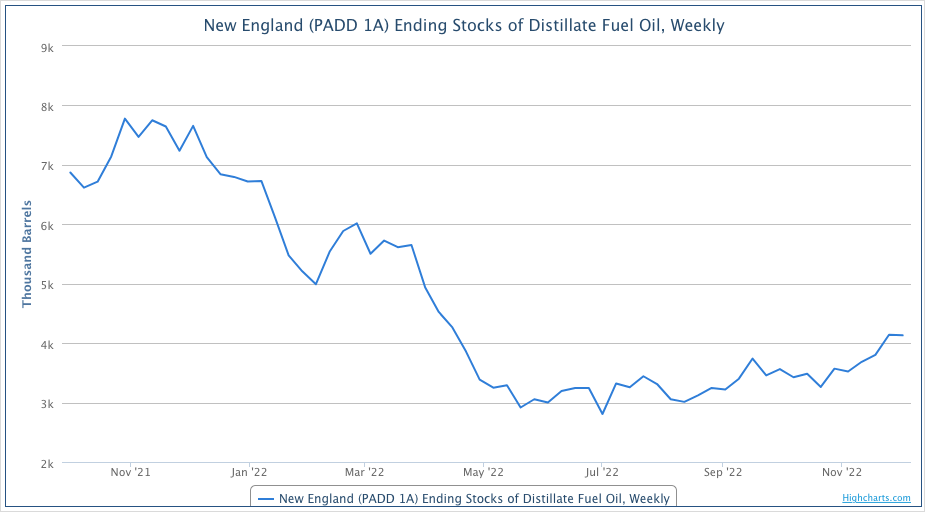
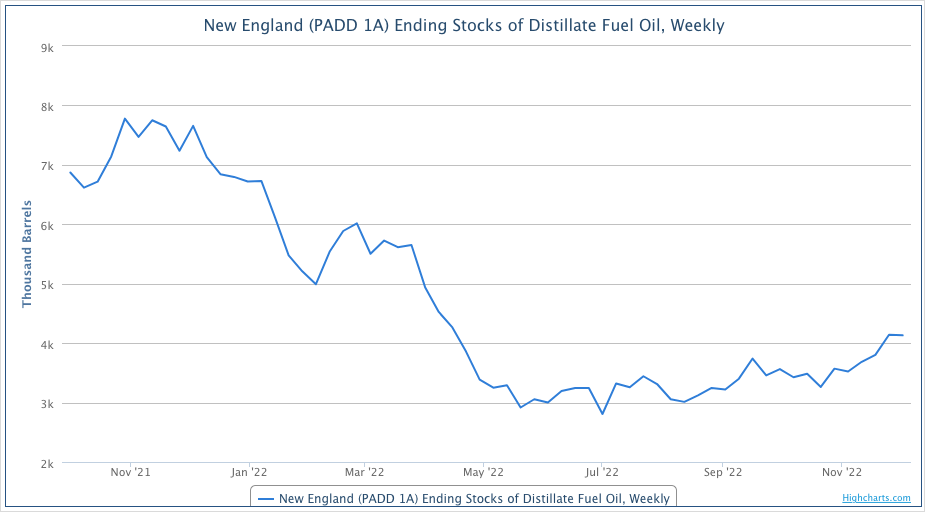
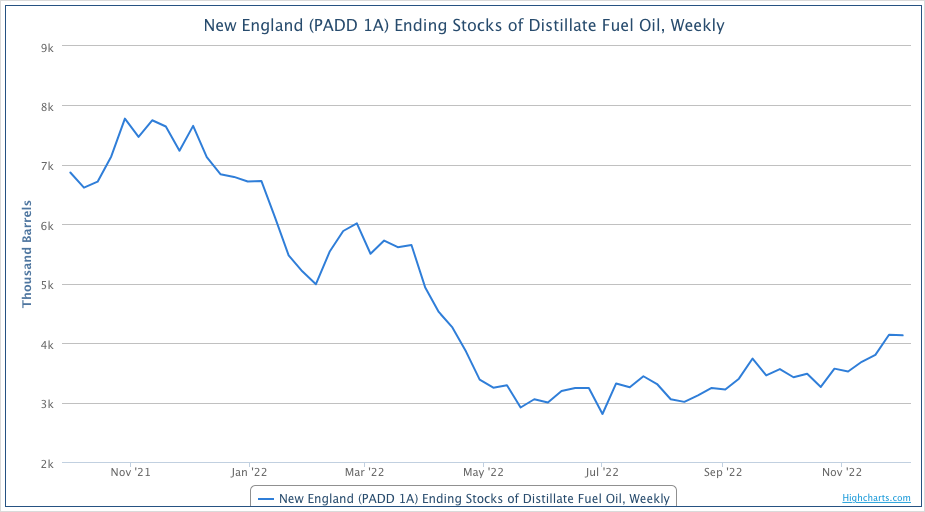
In either scenario, this can lead to high gas basis and forward power prices. But this year, these high prices have been exacerbated even more. Inflationary pressures have increased fuel oil prices and regional fuel oil inventories are well below last year’s levels.
Conversely, if LNG fills the gap, that too is facing upward price pressures. Due to damage to the European Nord Stream pipeline, which has caused an interruption of Russian gas supply to Europe, international LNG prices have skyrocketed to unprecedented levels and have impacted costs domestically. While there has been some relief, prices remain very high.
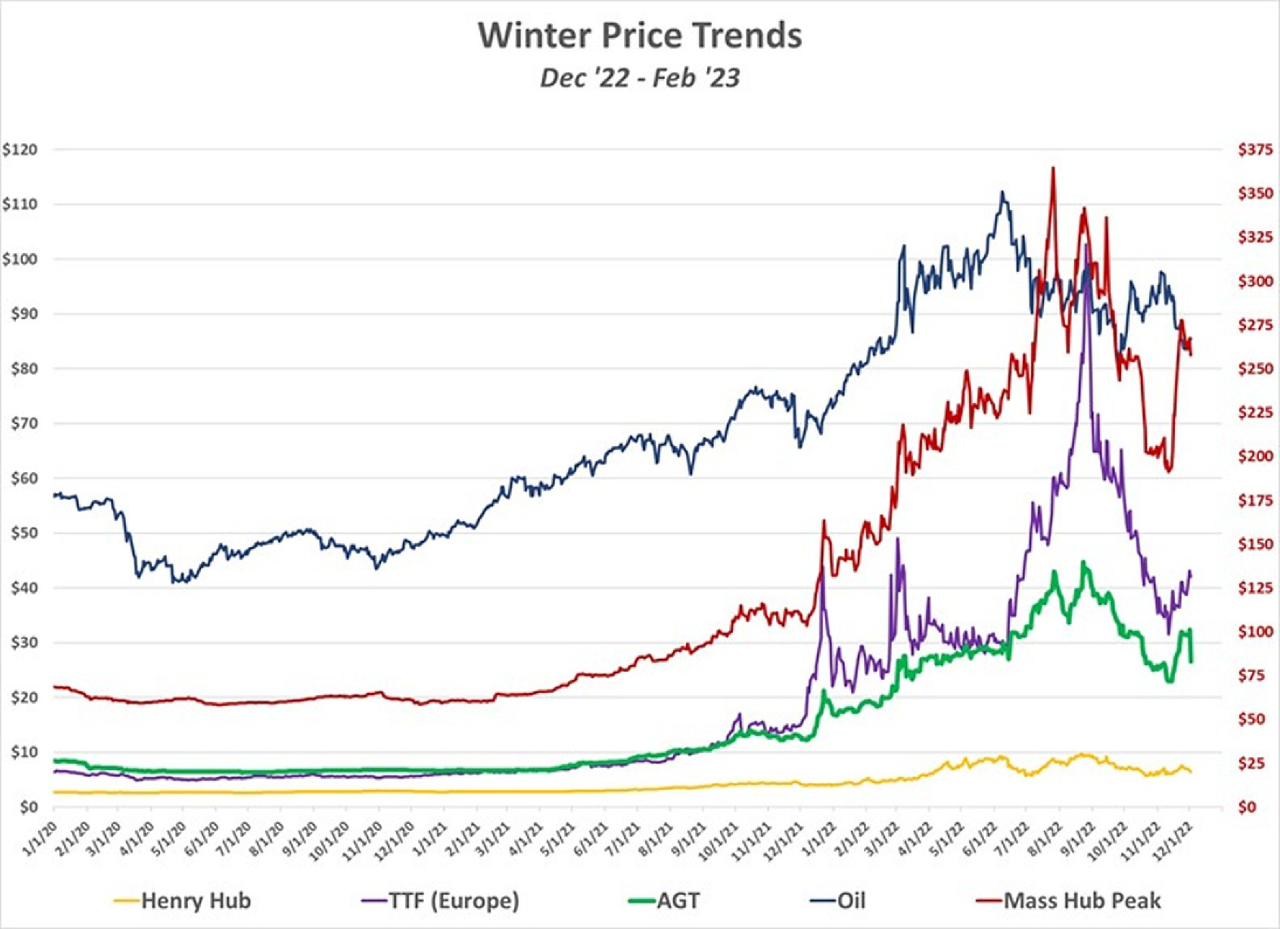
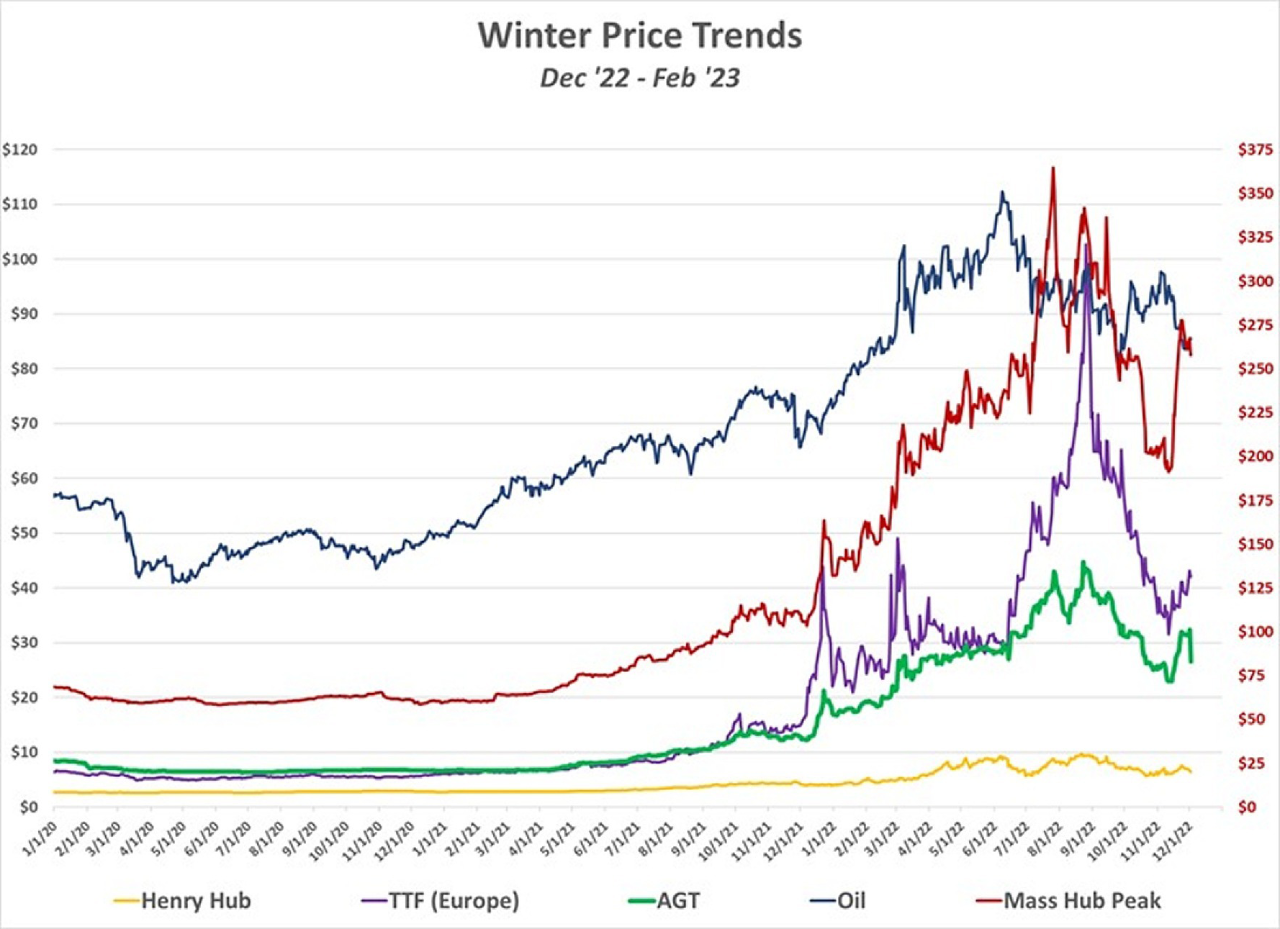
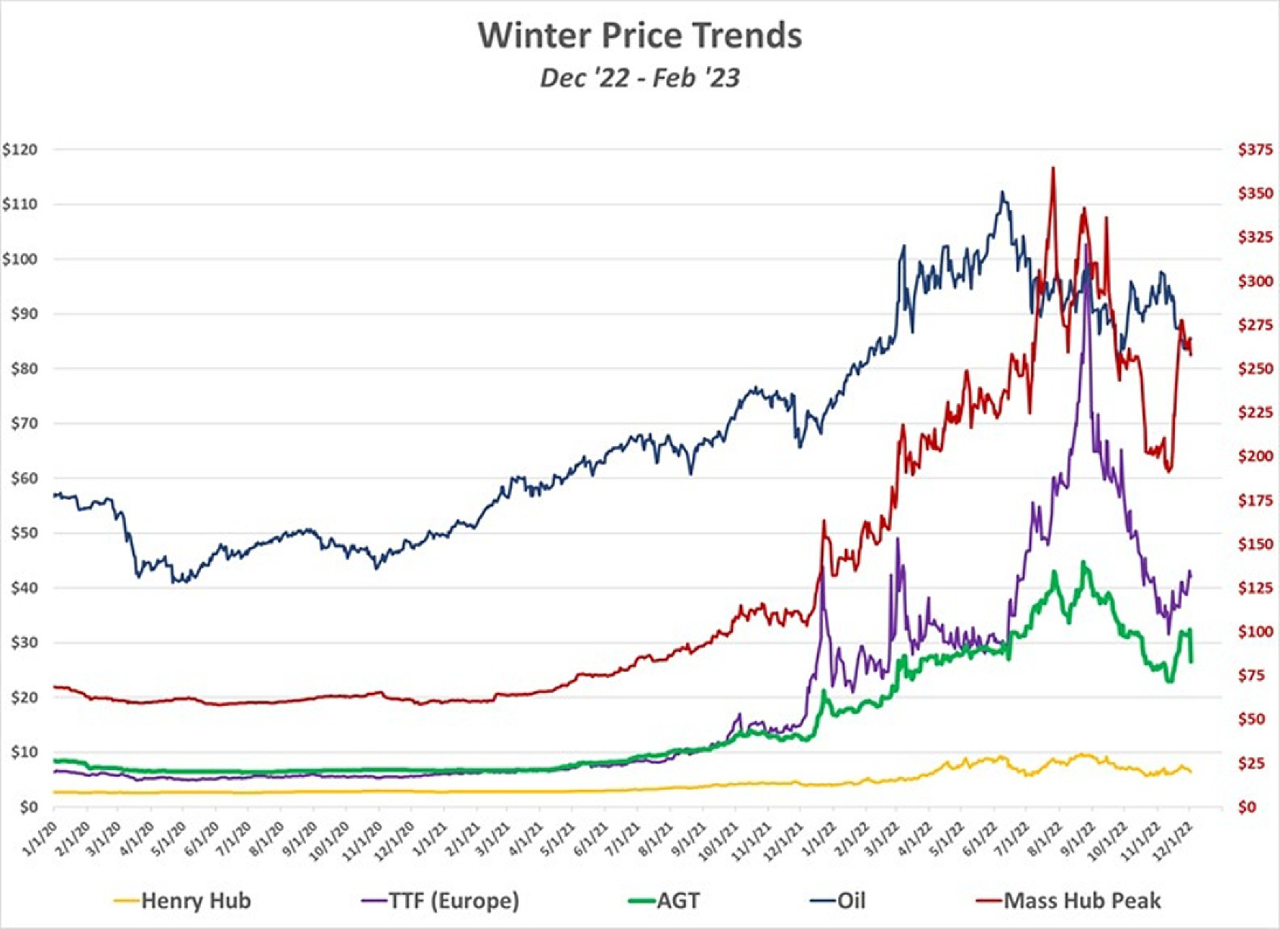
The following chart illustrates the impact of European gas prices (including LNG), which are correlated with the TTF (Europe), and crude oil prices (“oil”) on New England gas prices at the Algonquin citygate. The AGT price is inclusive of Henry Hub + gas basis.
What do these fundamentals mean for buying?
If you have clients that have not locked in their gas or power price for this upcoming winter, it really comes down to weather and LNG and whether the current market risk premium is appropriate for their tolerance. If the weather is mild overall and prices stay consistent, keep in mind that even a few short periods of extreme cold can drive demand above the delivery capabilities of the pipelines and cause spikes in spot gas and power prices. Extreme spikes even for short periods can negate any savings a customer may have enjoyed from a relatively low market.
Strategy considerations for your customers who have unhedged load going into winter
Make sure that your customers are able to endure price volatility or consider an alternative strategy, such as layered purchasing or a mix of fixed-price and index purchases. These strategies are available for both gas and power and can include support from a team of energy advisors.
Even customers that have already finalized their strategy for this winter can benefit from long-term planning. The same variables that are driving prices up for winter 2022-23 have also pushed prices higher for future winters. For example, gas basis to the Boston area for the November 2023 – March 2024 strip is near $15.65/Dth which, when added to the NYMEX, puts pricing at $21.42/Dth. Meanwhile, Mass Hub electric on-peak forwards for the same term are at $168/MWh (as of Dec. 2, 2022). Depending on how spot prices behave for this winter, those prices could move substantially.
If the weather is mild and price spikes are limited, expect some price relief next winter. On the other hand, if price spikes are extreme and sustained, prices for 2023-24 could rise to higher levels than seen this winter. Only with hindsight will we know the impact of weather, inflation, international LNG, and oil prices on natural gas and power prices. In addition, there can always be an unexpected wildcard.
Strategy considerations for beyond winter
Although we can’t predict what future prices will be, there is one clear recommendation: customers — and you as their consultant — should be prepared to take swift action if there is a market opportunity that fulfills their needs. This could mean:
- Locking in a fixed price if there is a substantial market dip
- Selecting a hybrid retail product structure that provides flexibility for your customers to layer buying decisions.
A layered approach negates the need for your customers to pick one day to buy 100% of their energy and allows you and them to manage risk via a dollar-cost-averaging.
What if prices remain high?
We will work with you to put a strategy in place that can help mitigate some of the risks for your customers, which could include:
- A short-term contract as a defensive approach while waiting for a strong buying opportunity
- A long-term contract to leverage lower prices further into the future and smooth out higher near-term prices
- Hybrid products, which incorporate both paths (short- and long-term purchases/fixed and index pricing options) into one strategy
Higher prices may be here to stay, so be prepared
Regardless of your approach, there is no end in sight to the high prices, risk, and volatility of energy prices in New England. Even utilities’ standard service offers have caught up to market price increases so there is little opportunity for protection by moving back to utility service. In fact, utilities are unable to offer the flexible energy strategies that energy suppliers like NRG can, which may help mitigate customers’ exposure to market volatility and climbing prices and help them avoid unnecessary risk.
Reach out to your NRG Account Executive to discuss your New England customers’ options for energy purchasing amidst these challenging market conditions. Our team, including energy advisory services, is prepared to provide the expertise, options, and terms that can help your customers protect their budgets in a high-priced market.
Additional source: NYMEX

Share on