








How to prepare for a winter that looks gentle but can bare its teeth at any moment
What businesses and energy managers need to watch for
How to prepare for a winter that looks gentle but can bare its teeth at any moment
What businesses and energy managers need to watch for
The National Oceanic and Atmospheric Administration (NOAA) is predicting milder than usual temperatures across much of the U.S. for this winter, much as it did last year.
Winter 2021: U.S. temperature Outlook
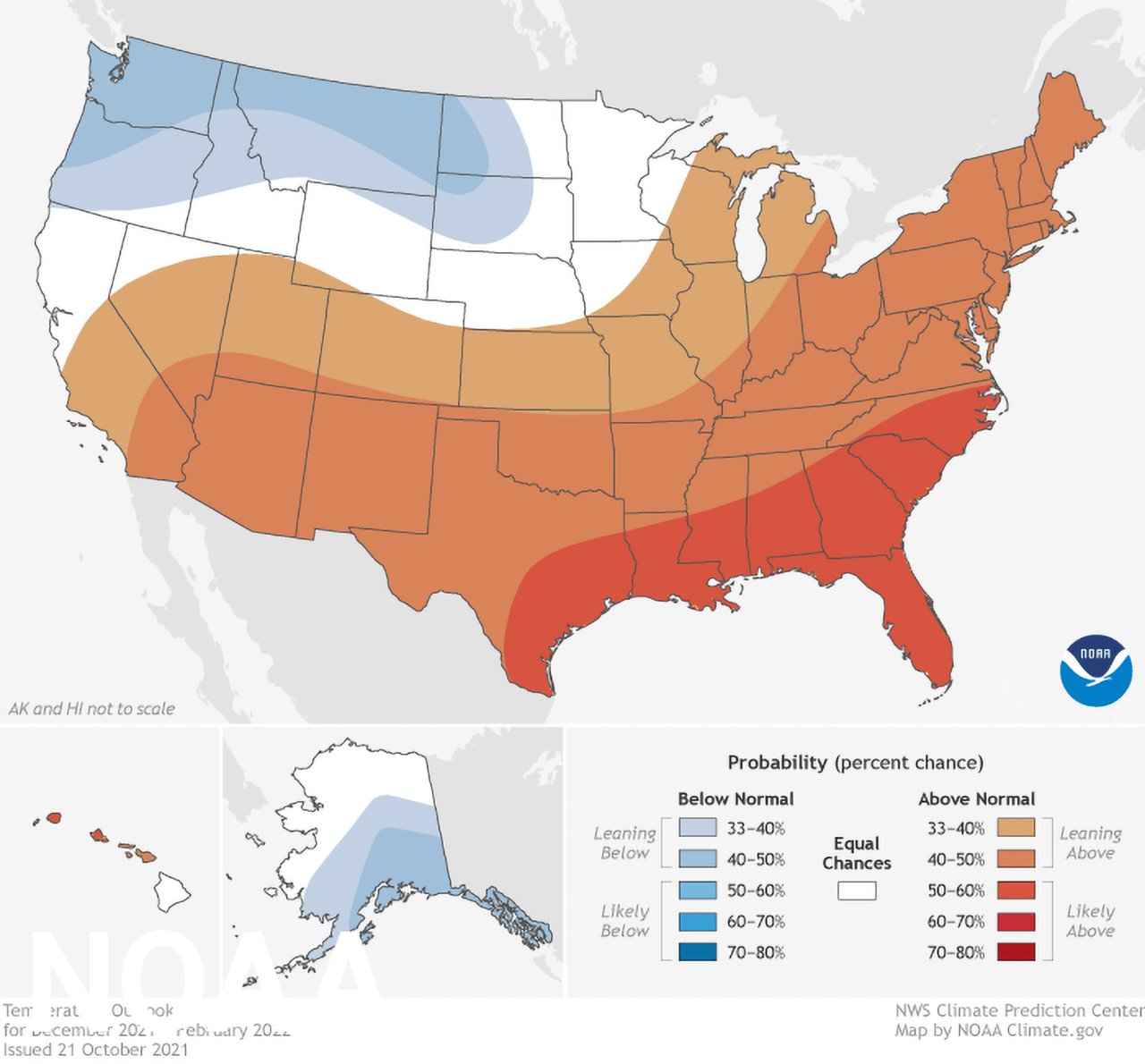
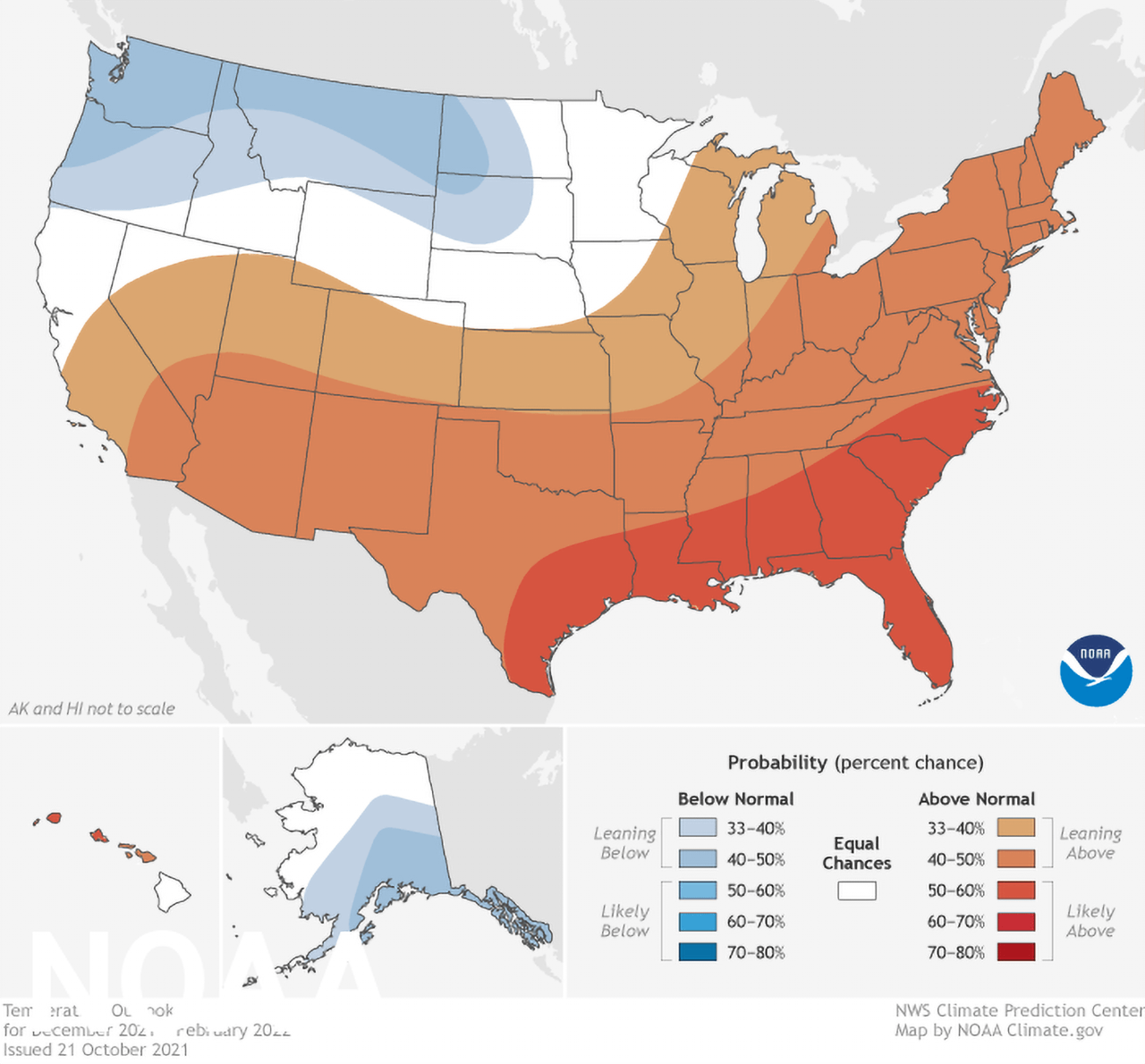
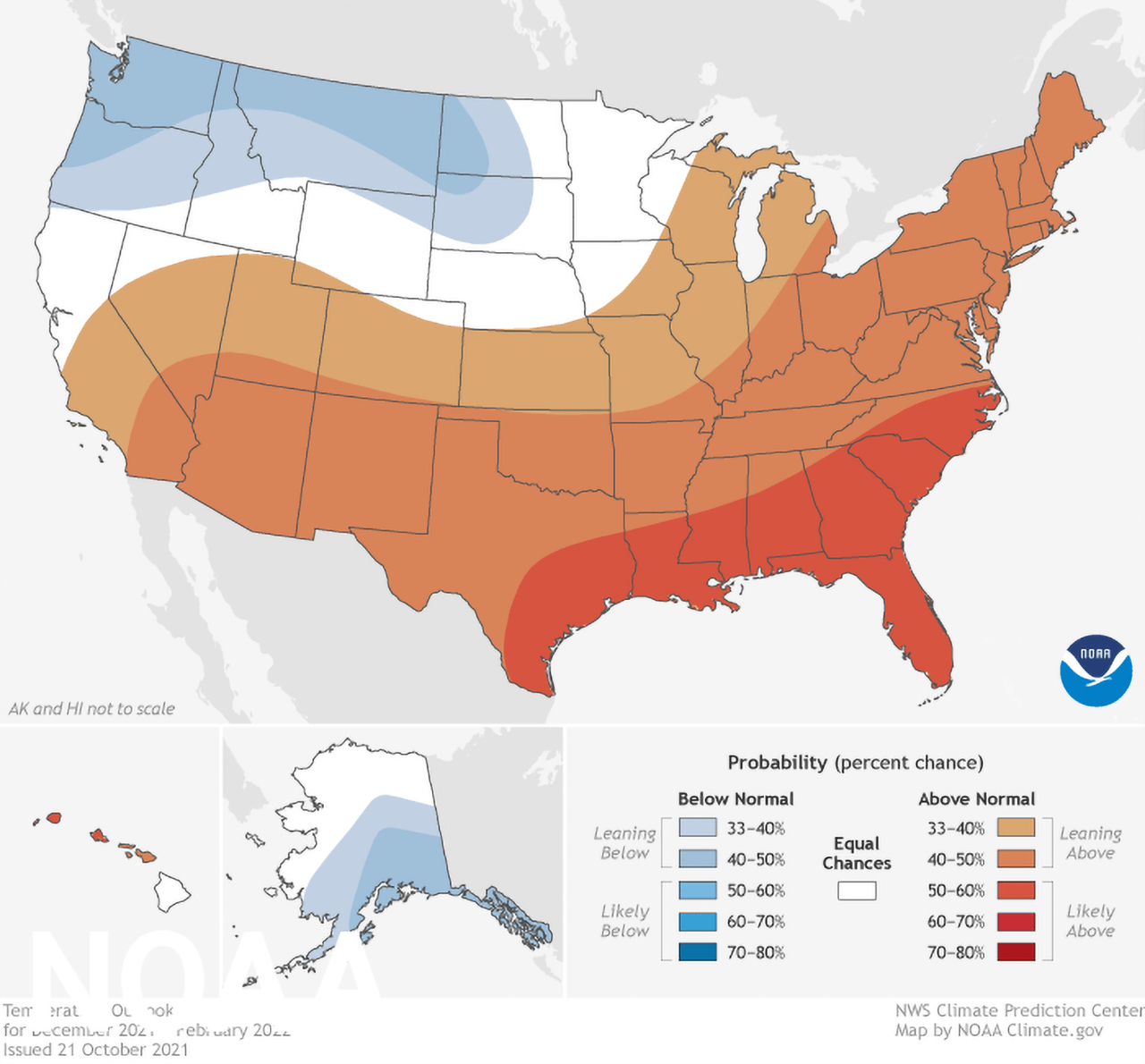
At first glance, this may sound comforting, particularly if you’re located in a region where winters can challenge electric reliability and spike energy prices. However, it’s often said that the only true measure of predictability when it comes to weather, is its unpredictability. It’s a good reminder that a few days of extreme winter weather is always possible, and it can strain the grid that serves you.
Watching the coasts
Even if this winter proves to be mild on average, your pocket of the country may not fall into the norm.
For example, those in the Southwest should be aware that NOAA pegs your region as “an area of concern” because of ongoing drought conditions. Drought can lead to reliability issues on the grid, such as utility power shutoffs to avert wildfires in California, or power plant shutdowns if water levels in lakes fall too low to be used for cooling.
On the East Coast, a mild winter may sound like good news, but it’s important to note that a warmer winter can fuel major coastal storms. Late October already offered New England a taste of this potential, with a nor’easter delivering hurricane-force winds and knocking power out for days for more than 600,000 homes and businesses.
Fuel constraints
Weather is only one element to consider. There are other variables, such as fuel availability issues. In California and the Northeast, the supply of natural gas — the fuel used to generate about one-third of electricity in the U.S. — could face winter delivery constraints. The same is regarding coal, which is still an important piece of the grid reliability puzzle in many areas.
Natural gas, pipeline, and storage capacity limitations can jeopardize the ability of these regions to meet demand. When that happens in the Northeast, energy providers turn to liquefied natural gas (LNG). But the market for LNG is expected to be competitive and expensive as Europe and Asia vie to secure the commodity to offset their natural gas shortages.
In New England, inadequate pipeline capacity can crimp natural gas supplies when demand is at its peak. In California and the Southwest, the problem is a lack of storage for natural gas, which is used for 60% of on-peak demand. As NERC points out, this can lead to fuel supply curtailment or disruption at power plants when extreme events occur.
Cold snaps also can disrupt the movement of electricity. If extreme cold blankets a broad geographic swath of the U.S. — increasing power and fuel demand in multiple regions — electricity transfers become limited as does the ability to economically move fuel. Imports from one region to another may no longer be available to meet peak demand, leaving grid operators unexpectedly caught short.
Ongoing economic frictions present another wildcard for this winter. A confluence of issues including a shortage of electricians and supply chain disruptions could impact the power industry’s ability to bring new generating capacity online and conduct maintenance and repairs on existing infrastructure.
How will this affect what you pay?
As a result of these uncertainties, the price of energy appears volatile heading into this winter.
“As last year demonstrated, even in close-to-average winter, severe energy market disruptions can occur,” the U.S. Energy Information Administration (EIA) said when discussing the weather-related risks that exist this winter. “Although these weather events are inherently unexpected, the prevailing high prices and low inventory levels across a range of fuels heading into this winter mean that even short spells of severe weather have the potential to affect energy markets.”
Natural gas prices have already surged to levels not seen in the better part of a decade because of national and global supply concerns. In New England, the price of natural gas for January has soared to more than $22 MMBtu (almost four times the price at the benchmark Henry Hub terminal in Louisiana) this winter.
The federal government expects winter natural gas bills to be 30% higher this winter compared to last, particularly in the Midwest, where a 45% increase is projected.
Higher natural gas prices tend to drive up electricity prices. EIA predicts average electric bills this winter will be 6% higher than last year.
And that’s all based on the expectation for a relatively mild winter across the country. If the winter is 10% colder than forecast, the EIA expects gas bills to be 50% higher and power bills to be 50% higher this winter compared to last.
But how will energy consumers respond to these high prices? That remains an open question. Higher prices could result in consumers dialing back the thermostat to save money, thus blunting demand peaks. But in a dangerous cold snap, history shows that consumers will suffer high prices to stay warm, meaning peaks are unavoidable.
How you can prepare
So, what can you do now to best prepare your business for a season of uncertainty? Here are five recommendations:
- Make sure your buildings are as energy-efficient as possible. The adage in the energy industry is that the kilowatt not used is the least expensive one. The idea is to wring the maximum amount of work out of each electron of energy you purchase.
- Review electric supply contracts to be sure they are structured to reflect the level of risk appropriate to your operation’s tolerance.
- Consider signing up for a demand response program. Deadlines for registration vary by location.
- Add energy resilience with onsite energy and a flexible demand program. Distributed energy systems and backup generators can keep your power on when the grid faces power surges or power outages. Distinct from energy efficiency or onsite energy, flexible demand gives energy consumers the ability to change how much energy they use at key points — both with advance notice and in real-time response — to save money.
- Pursue steps 1-4 in a synchronized fashion. Rather than treating each as a separate activity, view them as a package to create a holistic approach to “strategic load management.” For example, savings from energy efficiency may help you pay for your onsite energy. Onsite energy resources can be incorporated into a flexible demand strategy, which can better position your business to earn revenue from demand response programs.
If you’re not in the power industry and lack a partner that offers a range of energy services, these steps may seem daunting. Or you may worry that managing them will distract key resources from delivering on your core mission.
To create an energy management strategy that is built to manage seasonal uncertainties, consider partnering with a sophisticated provider. Companies like NRG, with decades of experience, can guide you through a plan that considers your entire energy facility to leverage maximum value.
No need to brave the cold alone.

Share on