











Electricity markets: what’s the difference between a wholesale energy market and a capacity market?
Electricity markets: what’s the difference between a wholesale energy market and a capacity market?
In short, power generators (the companies that own power plants) sell electricity to retail electric providers (the companies that sell electricity to homes and businesses). What you might not know is that each regional wholesale market in the United States operates under its own unique rules, which can affect how much you pay for electricity each month.
Wholesale electricity markets are generally operated in two ways:
- Traditional wholesale markets are operated by regulated electric utilities or federal organizations like the Tennessee Valley Authority in the Southeast and Bonneville Power Administration in the Northwest. These organizations sign contracts for electricity from power generators and are responsible for operating and managing the entire system, including delivering power to customers.
- Wholesale markets are operated by organizations known as either independent system operators (ISOs) or regional transmission organizations (RTOs), which independently manage the transmission of electricity across a regional system and foster competition among power generators and buyers.
Understanding energy and capacity in wholesale markets
Safety, reliability, and affordability — these are the goals of every wholesale market, but how they go about reaching them can be very different. Wholesale markets can include the sale of some or all of a variety of products to ensure your electric service remains safe, reliable, and affordable, including:
Energy — electricity sold for use by customers, measured in watt-hours
Capacity — the potential to generate electricity when needed, measured in watts
Ancillary services — a broad bucket of smaller services that ensure an electric grid remains reliable and resilient
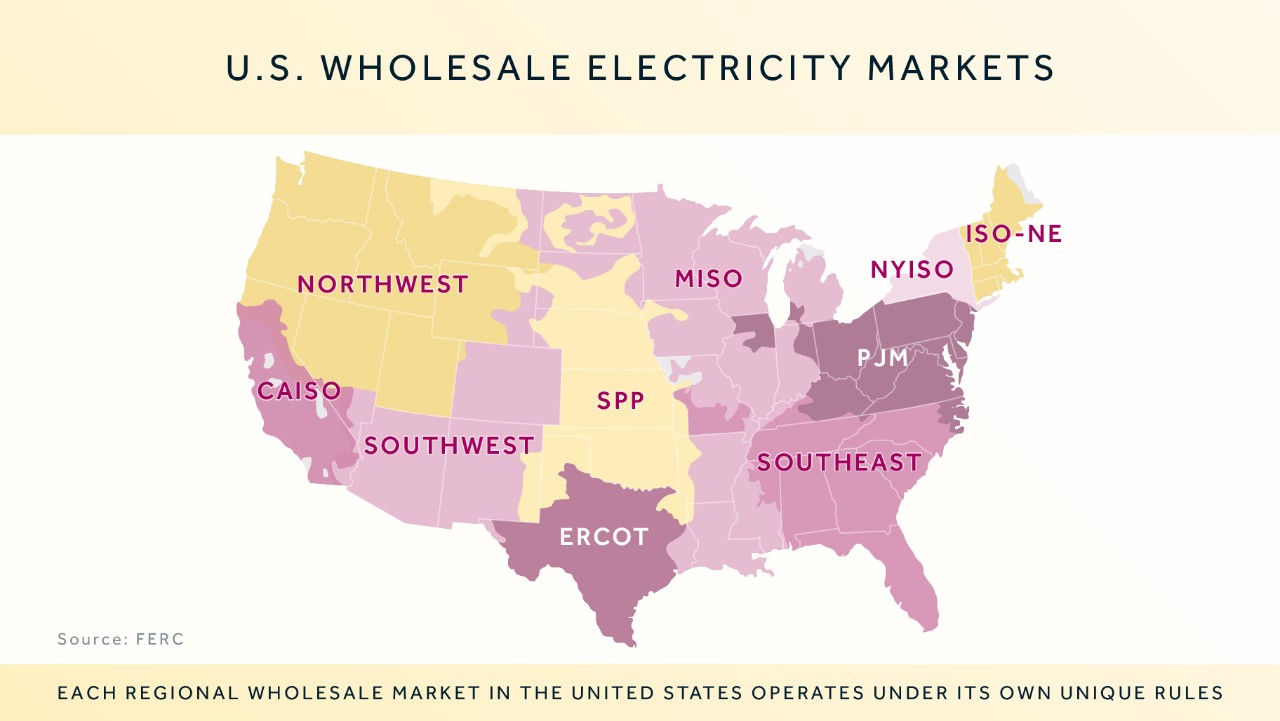
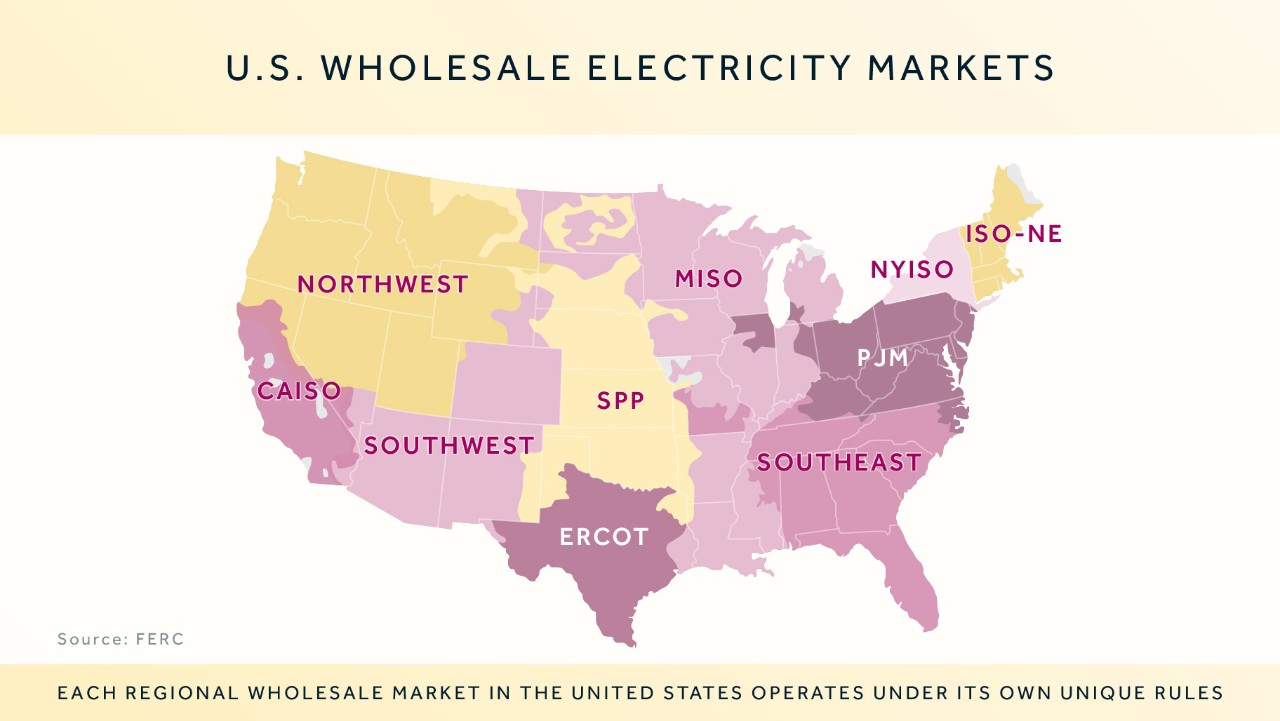
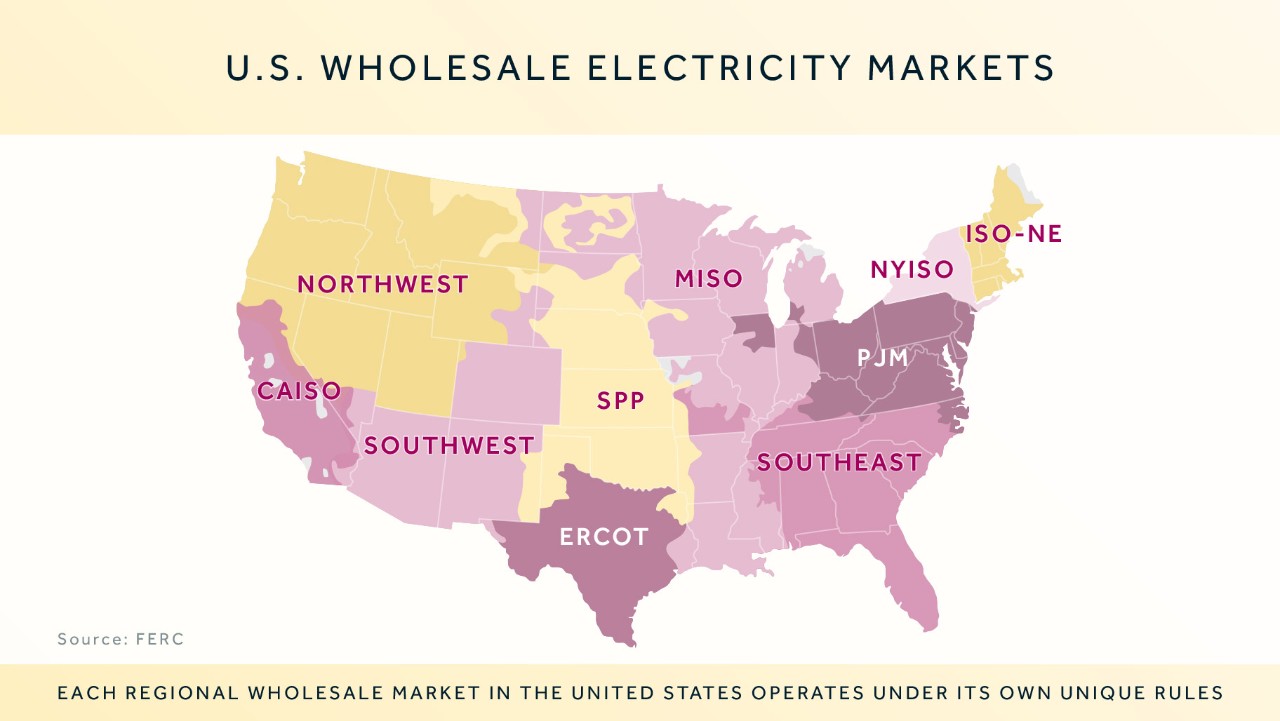
Some wholesale markets only sell energy, while others include separate markets to sell energy and capacity. Though most market structures oversee a variety of ancillary services, let’s dive into the differences in approach and philosophy between energy-only and capacity market structures.
Energy-only wholesale markets
In an energy-only wholesale market, power generators only sell electricity to buyers. Often, generators sign long-term contracts with retail electric providers to provide a large amount of electricity over an extended period of time. Because large power plants take years to build and even small systems like a rooftop solar array can take months to install, the ISO or RTO needs to know years in advance if generators can supply enough electricity to meet demand.
ERCOT in Texas is one example of an energy-only market. The market works with generators and retail electric providers in determining how much electricity supply is needed in the future but relies on market forces to incentivize generators to build and maintain generation to meet long-term demand needs.
Capacity markets
A capacity market adds another layer to a wholesale market, and they exist to increase the certainty that there will be enough electricity supply to meet expected demand years down the road. The PJM, ISO New York, and ISO New England wholesale markets all include an energy market and a capacity market.
As an energy market pays generators for the electricity they generate (measured in watt-hours), a capacity market pays generators for the generating capacity they promise to make available (measured in watts). For example, if a generator owns a 1,000 MW nuclear plant, it will receive a payment for promising to continue to operate that plant for a specified term in the future, separate and in addition to the payment for electricity generated. Additionally, some markets, like PJM, will penalize — often monetarily — generators for failing to produce and/or provide the capacity they promised to make available. When retail electric companies buy electricity on these wholesale energy markets, the market operator adds a proportional charge for capacity. This extra cost is generally passed through to end-use customers — homes and businesses.
Which type of wholesale market is best?
There’s no one right answer. Proponents of energy-only markets often argue that capacity markets create unnecessary additional costs to consumers for a job that generators and retail electric providers are already doing for free — figuring out how much electricity consumers will need in the future and meeting that demand. Proponents of capacity markets often say the risk of unreliable electricity service due to inadequate supply is too high without a formal system of central planning.
While homes and businesses usually buy their electricity on the retail market from retail electricity companies, it’s worth following trends in relevant wholesale energy and capacity markets. Knowing the latest can help you plan ahead and make the best decisions for your energy supply.


Share on