








Distributed Energy Resources in PJM: What’s the Smart Play for Businesses?
Distributed Energy Resources in PJM: What’s the Smart Play for Businesses?
If you’re a business carefully managing your energy supply, you’ve inevitably run into information about solar, energy storage, on-site generators, microgrids, and demand response.
But how exactly can they serve you? What’s the cost? And how does PJM — your grid operator — treat these resources?
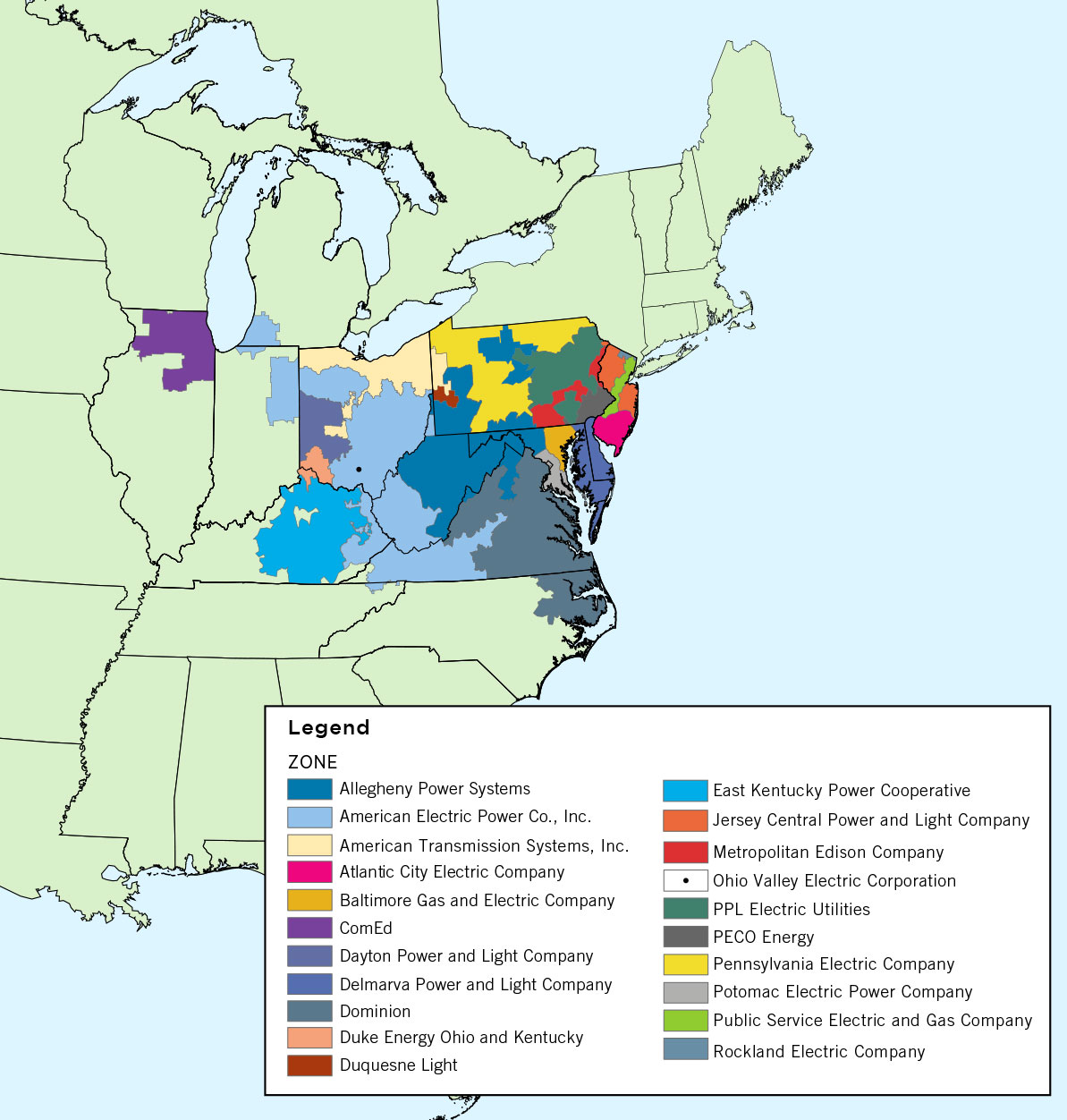
Known as distributed energy resources (DERs), these assets offer ways to generate or manage your energy locally, often on your premises. Businesses turn to distributed energy to gain greater reliability, cost advantages, and cleaner supply.
Optimizing distributed energy resources with integration
While DERs offer countless advantages on their own, they often produce their greatest benefits when they are combined. Consider solar, for example. It’s a resource that supplies clean, but not necessarily reliable energy. A common misconception is that buildings with solar panels will have power if a superstorm strikes and causes grid outages. In fact, they don’t, since the solar panels are connected to the grid.
That problem can be solved by integrating solar panels into a microgrid that includes natural gas generators and perhaps energy storage. A microgrid is a software-based system with control technology that can ‘island’ or separate your on-site generators from the central grid. If a power outage occurs, the microgrid isolates your system and activates your on-site generators or energy storage system. You have power while others around you don’t—that’s the power of integrating DERs.
With our Asset-Backed Demand Response (ABDR), your on-site system not only offers electric reliability but also sophisticated cost management. When the energy system is not being used for back-up generation, it can participate in certain PJM market programs, such as demand response, where PJM pays you to help it lower demand on the grid when it’s under stress. So, on an extremely hot or cold day, you would use your on-site generators instead of grid power and be paid to do so.
Driving growth with tech advances and regulations
Because it’s becoming easier—from a technology and cost perspective—to install distributed energy, its use is rapidly increasing with an annual growth rate of 15.9%, according to a Microgrid Knowledge article that cites Navigant Research data.
This may seem like a sudden surge of growth, but the groundwork has been laid for decades. Distributed energy resources emerged out of years of technological refinement and regulatory changes that opened up markets to greater competition.
An overview of distributed energy resources within PJM
PJM offers fertile territory for distributed energy resources, such as ABDR, because it is:
- One of the oldest and largest examples of a competitive electric market and has become a hub of innovation
- Rich in natural gas with two of the largest shale reserves, Marcellus and Utica, seven major interstate gas pipelines, and 32 natural gas distribution companies. As a result, natural gas generators used in ABDR have an ample fuel supply, available when renewable energy ebbs because the sun isn’t shining or the wind isn’t blowing
- Noted for its sophisticated use of demand response, which has produced generally high revenue for customers in recent years — while bolstering grid reliability
Since the evolution of distributed energy resources is moving at such a fast pace, rules are still being refined in the US. PJM, for example, is now instituting significant changes in its demand response program, transitioning over to models that require greater participation. For some companies, the new requirements may be difficult to meet. PJM allows them to do so by aggregating their demand response reductions—meaning companies can combine the reductions in electricity consumption achieved through demand response programs from multiple sources or participants.
If your core business isn’t energy, this all may sound complicated. However, it doesn’t have to be. We can help.
Get started with us
At NRG, we can design, install, and operate your ABDR system for you — and in a way that requires little or no capital expense on your part, what some call an “as-a-service” model.
We bring to ABDR management years of commercial and technological know-how in retail and wholesale markets. With that experience, we’re able to transform your ABDR asset into a financial resource that’s easy to implement, offers long-term budget certainty, operates reliably, manages risk effectively, and offers a quick return on investment. Our approach is ‘microgrids made simple’.
To gain a greater understanding of your options within the new energy world — and why they’ve emerged — we invite you to read our white paper, “The Latest Evolution of Distributed Energy Resources: Opportunity for Businesses within PJM.”


Share on