








Demand-Side Management and How it is Used in Electricity Markets
Demand-Side Management and How it is Used in Electricity Markets
Last updated March 25, 2024
What is demand-side management and how is it used in electricity markets?
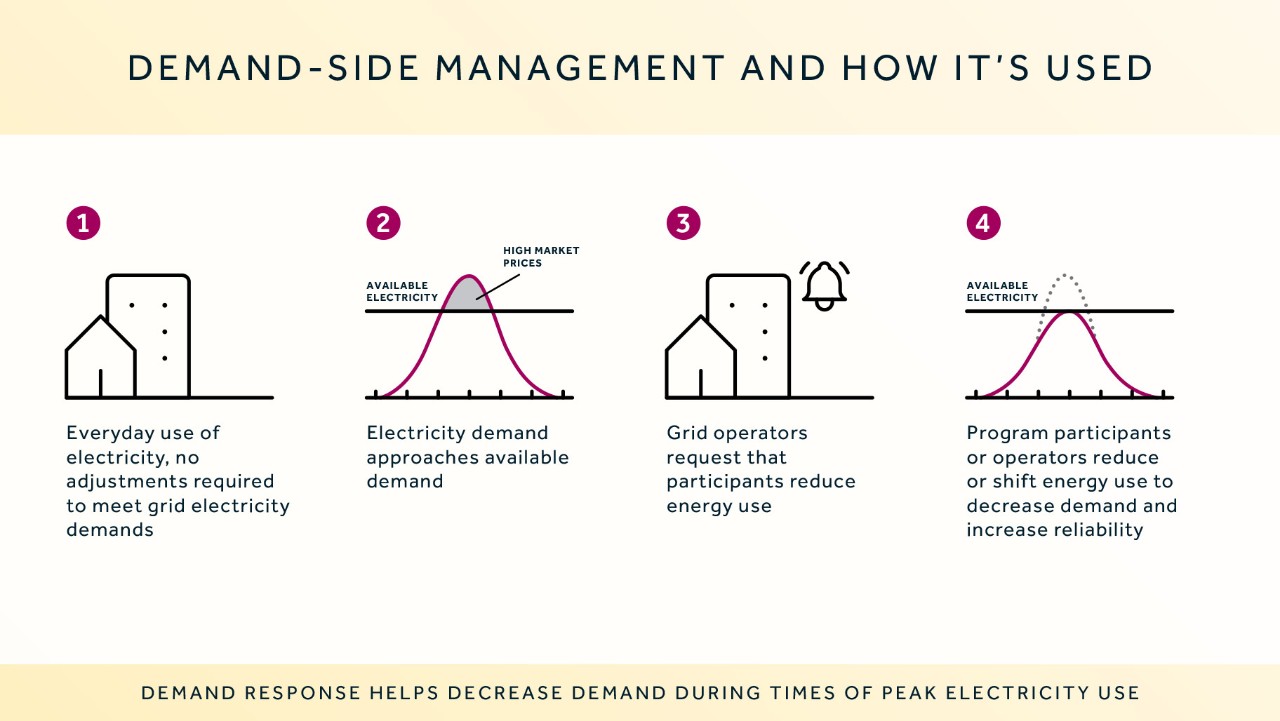
Demand-side management (DSM) is an energy industry term that describes the ability of a residence or business to manage their electricity use by either reducing or shifting its demand time for energy. The demand for electrical power is ever-increasing, and DSM is impactful for all electric industry stakeholders. DSM lets consumers control electricity consumption and contribute to a more sustainable, efficient, and eco-conscious future.
There are many ways to participate in demand-side management — both manual and through technology-enabled automation — to lower energy costs, reduce carbon emissions and achieve greater energy reliability.
Why is there a need for DSM?
In the past century, the world's growing population and industry developments have caused a significant and sharp rise in global energy demand. This surge in energy consumption has led to complex challenges, like incorporating renewable energy, categorizing energy loads, dealing with grid constraints, adjusting prices dynamically, and understanding energy consumers. To overcome these challenges, DSM offers practical solutions for managing energy demand in homes, businesses, industries, and agriculture.
The main forms of DSM
Flexible demand
Flexible demand is a form of consumer demand management. All energy consumers can change how much energy they use at key points. A homeowner, for example, might adjust their thermostat before leaving for work or turn off their water heater before a long trip. This is known as flexible demand.
Technologies that enable flexible demand are widely available. Some are likely already in your home or business. They include:
- Smart thermostats
- Smart building energy management controls
- Smart and timed water heating and other heating systems
- Electric vehicle chargers
- Distributed energy resources like solar panels and backup generators
- Smart refrigeration, elevators, and other electrical appliances
Why should you care about how much of your energy demand is flexible?
- First, flexible demand helps consumers save money on their energy bills by reducing total energy use or shifting energy use to periods with cheaper electricity rates. This can influence what you pay for electricity if you are on time-of-use pricing — not everyone is. The Brattle Group estimates demand flexibility could reduce energy costs by $15 billion per year across the United States.
- Second, flexible demand is a means to reduce your carbon footprint by using less energy or, if you own or lease an onsite distributed energy resource like a solar array, aligning your energy use with the energy produced by the system.
- Finally, flexible demand enables energy consumers to collectively decrease their energy usage during peak demand periods, which helps to enhance the dependability of the power grid and prevent blackouts and brownouts.
Demand response
Used in many retail energy markets, demand response is a tailored program that energy users can participate in if they are willing and able to temporarily reduce energy use when asked. Through these programs, customers promise to reduce energy by a certain amount when grid operators request it. When participants make good on their energy reduction, they are paid for their service.
In some cases, program participants are responsible for reducing their energy when asked. In others, participants can agree to allow program operators to automatically reduce or shift their energy use. These demand reductions can be achieved autonomously through the use of smart technologies but are often still achieved by manual actions within a home or business.
Traditionally, businesses have been the primary participants in demand response programs. However, there are opportunities for residential energy users to participate, such as signing with an energy service company that “aggregates” flexible demand capabilities. These residential companies enroll the combined capacity for demand reduction into a demand response program and then share a portion of their earning with their residents.
How energy service providers help customers benefit from DSM programs
Energy service providers help homes and businesses seize the benefits of flexible demand and, where available, demand-response programs. They perform audits to recommend flexible-demand technologies and services a home or business should consider using, install those technologies, design flexible-demand strategies tailored for each specific customer, and manage the strategy and technologies on behalf of customers.
Service providers can help homes and businesses qualify for and participate in demand response programs, and they can even help participants with their applications.
The future of energy consumption
At NRG, we understand that demand-side management is more than just a concept or a tool. It's a comprehensive approach to energy conservation that involves planning, operation, and customer service. Whether it's managing peak power demand or preventing power blackouts, demand-side management is an essential part of our energy grid.
The Energy Conservation Policy Act emphasizes the importance of energy-saving methods in achieving our environmental goals. As we navigate the energy transition, the role of demand-side management programs and energy flexibility programs only grow more important over time.
Share on